How to Reduce No-Shows at Your Gym, Clinic, or Salon
A cancellation lands in your calendar Wednesday morning. 4pm slot, gone. Nobody fills it. The therapist sits idle for an hour that was already sold, then unsold, and nobody in the building even notices until they're doing the week's numbers.
Reminders stop some no-shows before they happen. This is about the ones reminders don't touch, the cancellations that come through cleanly and still cost you the hour.
The reminder playbook only covers half the problem
If your no-show fix is a better reminder sequence, that's real ground and worth having. The reminder cadence that actually stops no-shows covers the timing that works. What it doesn't cover, because it's a different problem, is the slot that opens up anyway, whether from a genuine cancellation or a reminder that still didn't land.
A gym, clinic or salon runs on booked hours. An empty is an hour of revenue that existed and then didn't.
Fix 1: Put a waitlist behind every booked slot
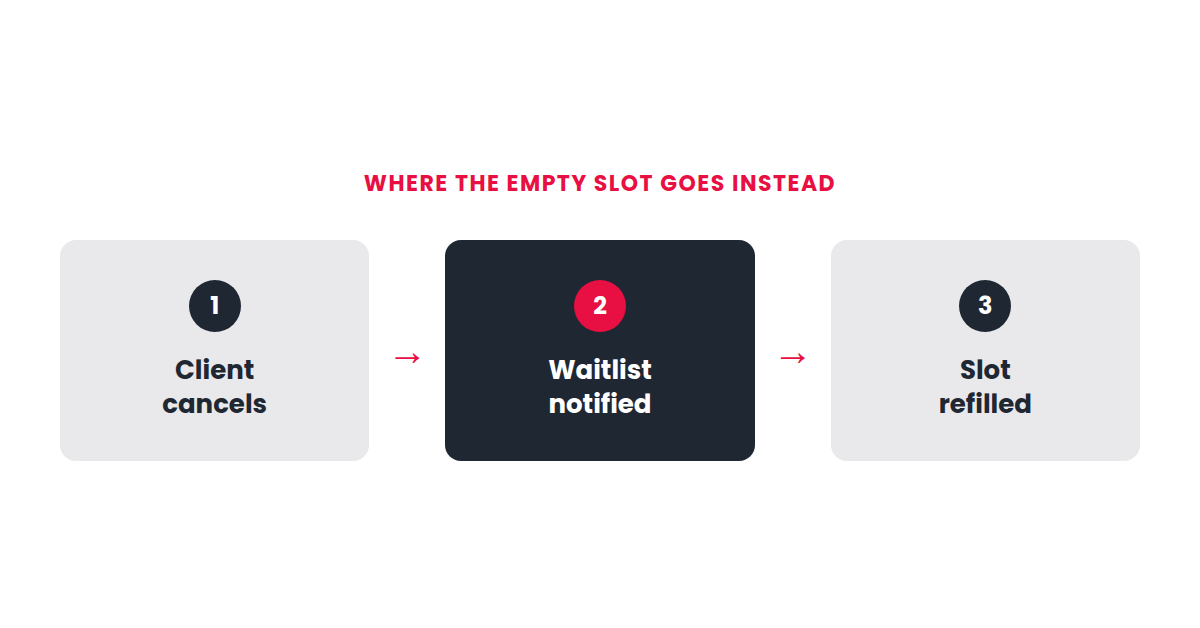
When someone cancels, the next person on a waitlist should get an automatic text with the option to grab that time, not a manual phone call from whoever happens to be at the desk. Clinics running this catch a meaningful share of cancelled slots before they ever go empty, and it takes zero extra staff time per cancellation once it's set up.
Fix 2: Make the cancellation policy do some of the work
A clear policy, a small deposit or a card on file for late cancellations, changes behaviour before it changes revenue. This isn't about penalising clients, it's about making the cost of a last-minute no-show visible to them the way it's already visible to you. Setting up a CRM for a service business is where the card-on-file and client history side of this actually lives, so the policy can apply automatically instead of someone having to remember which client has cancelled twice this month.
Fix 3: Treat repeat no-shows differently from first-time ones
Someone who cancels once, with notice, is not the same risk as someone who's a habitual no-show. Once client history is tracked properly, a repeat no-show can trigger a deposit requirement automatically on their next booking, while a first-timer with a fair reason doesn't get treated like a problem client. Without that history sitting somewhere useful, every cancellation gets handled the same way, and the policy either punishes good clients or lets the real cost sit unaddressed.
What actually changes
None of this replaces a good reminder sequence, it sits behind it. Reminders reduce how often a slot goes empty in the first place. A waitlist and a real cancellation policy determine what happens to the ones that do. Run both and the gap between booked hours and paid hours closes from two directions instead of one.
This is one piece of the bigger picture in how to turn one-time clients into regulars, alongside fixing the booking process itself so fewer of these slots go unfilled from the start.

