Why Phone-Tag Booking Is Costing Your Gym, Clinic, or Salon Clients
A new client calls your clinic at 2pm on a Tuesday. Front desk is with someone. It rings out. She doesn't leave a voicemail, she just calls the next clinic on her list.
You never know this happened. There's no missed booking in your calendar to chase, because it never became a booking. It just became someone else's client.
The booking software isn't the problem
Search "booking software for gyms" and you'll find pages of comparison charts: this app versus that app, which one has the better mobile view, which one costs less per month. All of it assumes the barrier is picking the right tool.
Most gyms, clinics and salons already have a booking tool. The gap isn't the software sitting there waiting to be used, it's that nothing catches the client who called and didn't get through, or who found the booking page and gave up two screens in.
Where the client actually gets lost
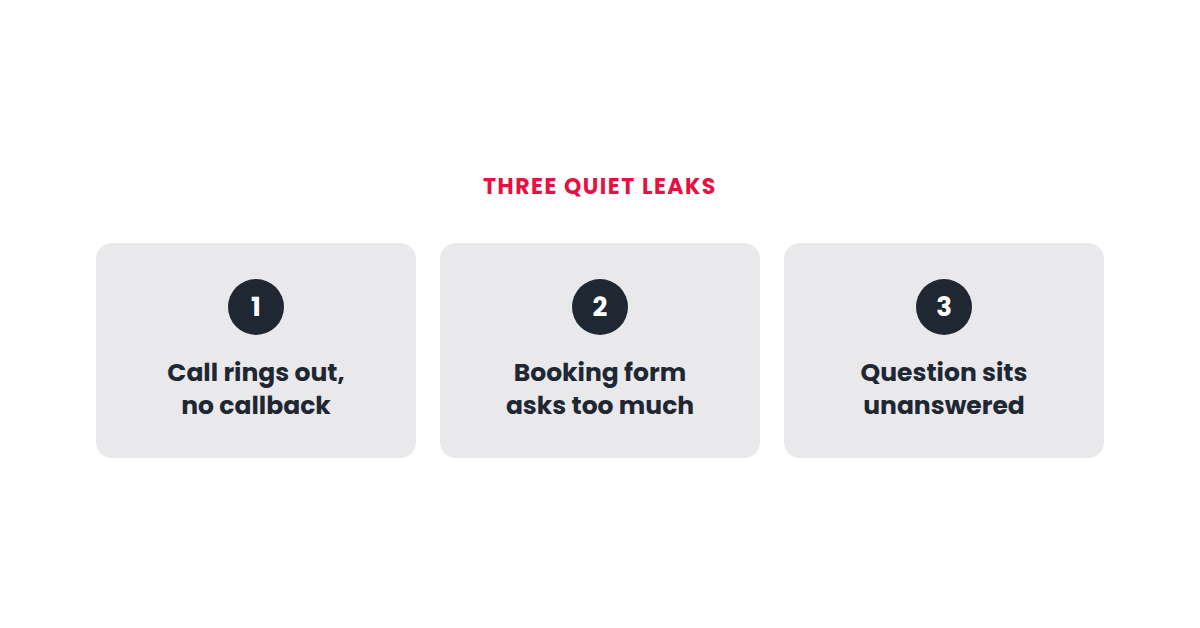
Three points cost more new clients than any of them get credit for. The phone rings out during a session and nobody calls back. The online booking widget asks for six fields before it shows an available time, so half the people close the tab. And a client texts a question, gets no reply for two days, and books elsewhere in the meantime.
None of these show up as a lost booking anywhere. They show up as slightly fewer new clients each month, with no obvious cause.
Fix 1: A missed call should trigger something, not nothing
If a call isn't answered, an automatic text with a booking link should go out within minutes, while the person is still thinking about you. This alone recovers a meaningful share of the calls that would otherwise just go to whoever answers next. Automating your calendar covers the setup for this in more depth, it's the same underlying mechanism as recovering a missed call, just aimed earlier in the relationship.
Fix 2: Make the first booking the easiest one
The booking widget for a brand-new client should ask for a name, a number, and a time. Everything else, the intake form, the waiver, the health questionnaire, can come after the slot is locked in. Every extra field before that first commitment is a chance for someone to close the tab and call your competitor instead.
Fix 3: Treat a booking enquiry like it has a shelf life
A question that sits unanswered for two days isn't a slow reply, it's a lost client, because they've usually already booked somewhere else by then. This is the same principle behind reducing no-shows with appointment reminders, just applied before the first visit instead of after it: speed and consistency of response matter more than any single conversation.
What this actually adds up to
None of these fixes are about switching booking software. They're about making sure a missed call, an abandoned form, or an unanswered question doesn't quietly turn into someone else's client. Once you can see where people are dropping off, and something automatic catches them at each point, the number of first-time clients who actually make it to a booked session goes up without anyone working harder on the phones.
This sits alongside the bigger picture in how to turn one-time clients into regulars: getting someone to book the first session is the first gap, keeping them coming back is the second.

