
How to Get Clients as a Coach or Consultant
A coach I work with used to keep her calendar open in a second tab all day, because every enquiry got a different price, a different pitch, and a different follow-up depending on how she felt that week and how much she remembered from the last conversation. Some months she signed three clients. Some months she signed none, and couldn't have told you why.
That's the pattern behind most coaches and consultants stuck trying to figure out how to get clients consistently. You're not bad at this. The gap is between the work you're excellent at and everything that has to happen before someone pays you for it.
You're Charging by the Hour, Not by the Value
Hourly pricing feels safe because it's easy to explain. It's also a ceiling. There are only so many hours in a week, and every one of them is worth exactly the same amount no matter what you actually deliver in it.
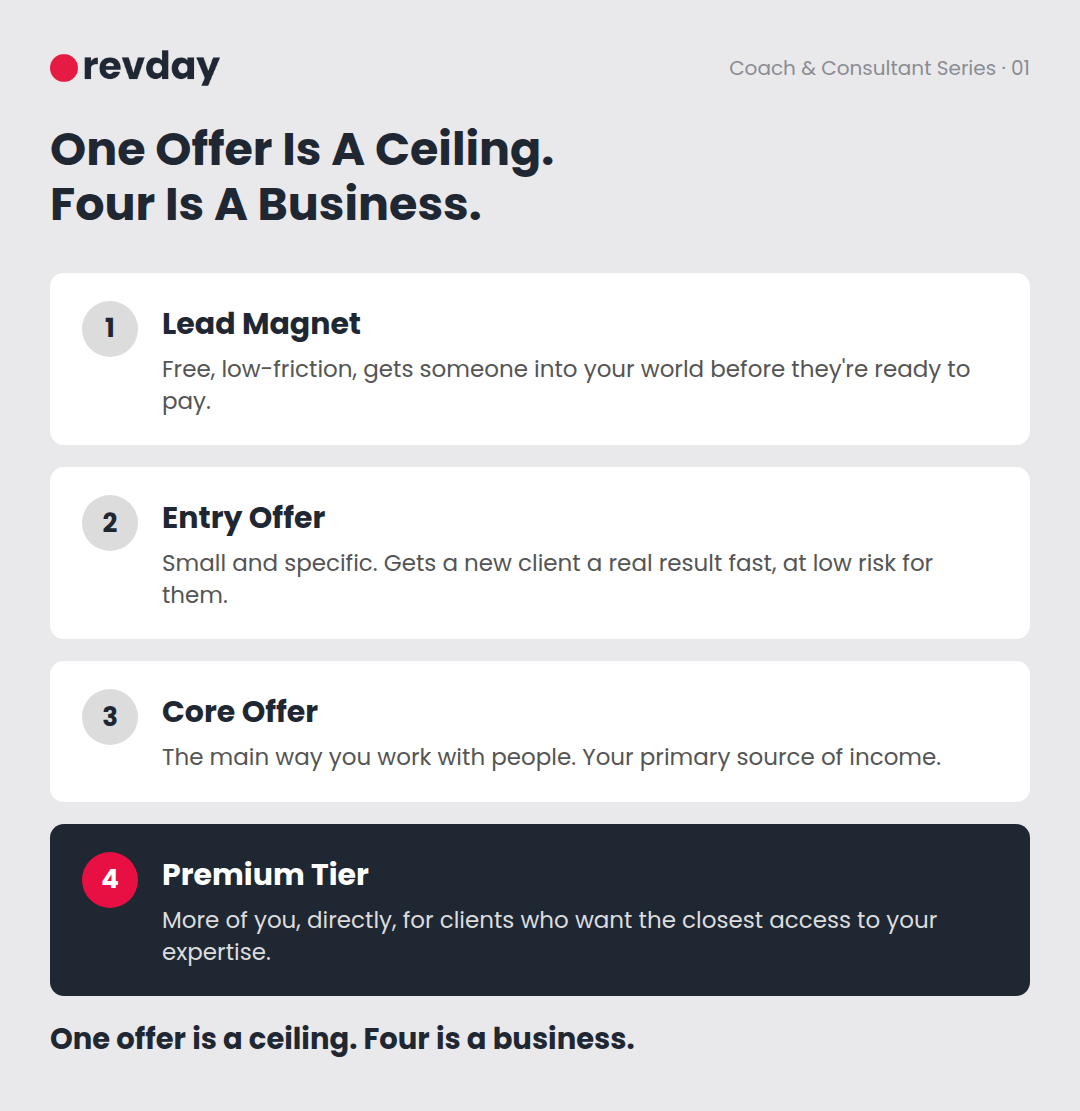
The fix isn't a single new number. It's a ladder: something small and low-risk for someone who isn't ready to commit, an entry point that gets a client real results fast, a core offer that's the main way you work with people, and a premium tier for clients who want more of you directly. One offer is a ceiling. Four offers is a business, and it's the same thinking Alex Lobb described after building his out: "Meticulous guidance with getting my business up and running." You can see the full four-part approach on the coaches and consultants page, and the full breakdown of the pricing problem itself is in why charging by the hour is capping your income.
You're Starting the Pitch From Zero Every Time
If every sales conversation feels like you're building the pitch from a blank page, that's not a confidence problem. It's because there's nothing built to lean on. You're relying on memory and energy to recreate what worked last time, and both run out.
Build the offer once, write down what's included, the price, and the result, and the next conversation becomes a matter of walking someone through something that already exists rather than inventing it live. This is where most coaches lose momentum without realising it. It's not that they can't sell. It's that they're rebuilding the sale from scratch every single time, a problem covered step by step in how to stop quoting from a blank page every time.
Your Leads Go Quiet While You're Delivering
Someone enquires on a Tuesday. You're mid-session with a client, so you reply Thursday. By then they've either found someone else or gone cold on the idea entirely. The leads didn't disappear because they weren't interested. They disappeared because nobody followed up while you were busy doing the work you're actually paid for.
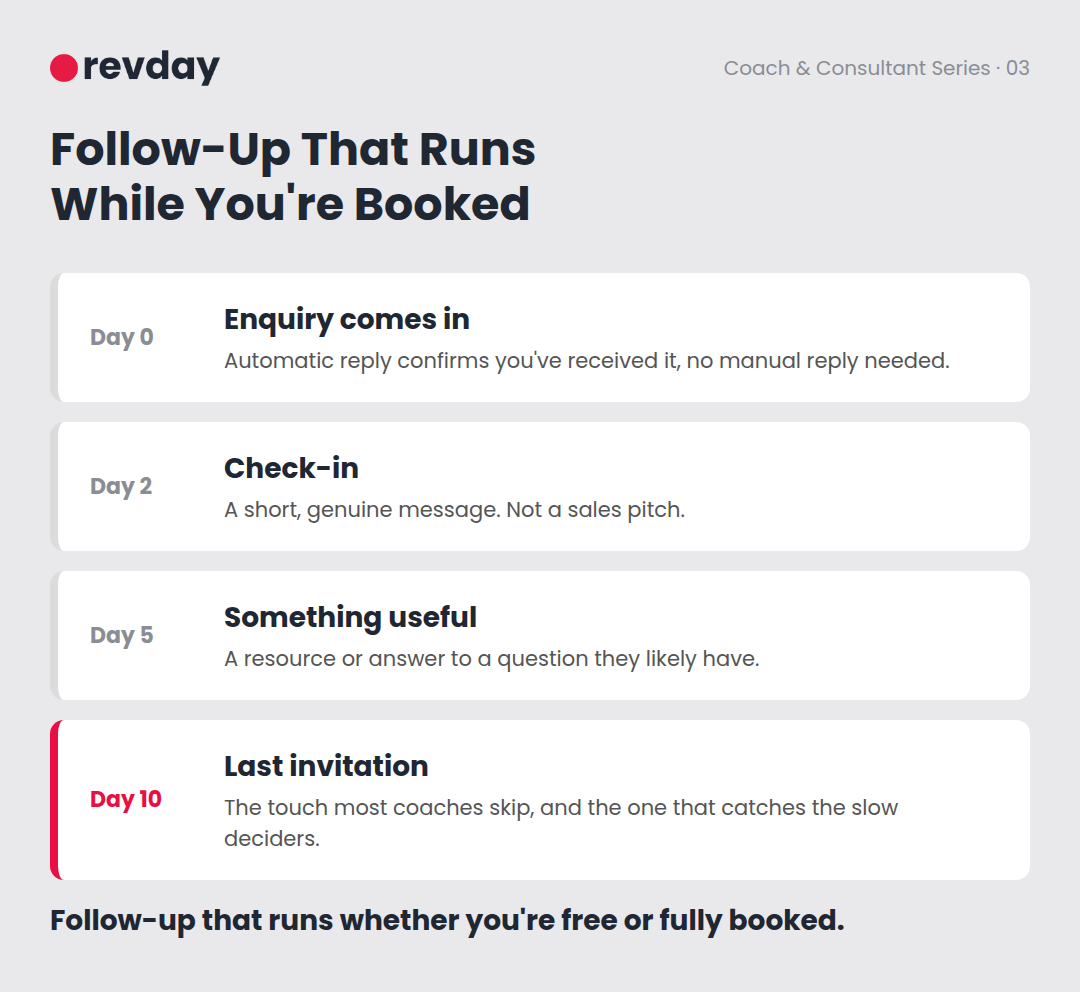
A short, automatic follow-up sequence, three or four touches over two weeks, catches the people who were interested but not ready the moment they reached out. It runs whether you're in back-to-back sessions or on leave, which is the only way to get more coaching clients without adding more hours to your week. The full sequence is laid out in how to follow up with leads when you're fully booked with clients.
Your Website Explains What You Do. It Doesn't Sell It.
Most coaching websites read like a resume: qualifications, a bio, a philosophy statement. None of that closes anyone. A visitor lands, reads for ninety seconds, and leaves without a clear next step because there wasn't one.
A site built to sell has one obvious action above the fold, a specific outcome in the first line instead of a mission statement, and a booking link that actually works on a phone. It doesn't need to be clever. It needs a visitor to know exactly what happens if they click, which is the whole subject of what your coaching website actually needs to sell.
You Have Real Clients and the Income Still Swings
This is the stage that catches coaches off guard. You're not new anymore. You have real clients and real testimonials. And some months are still great and some are quiet, with no obvious reason why.
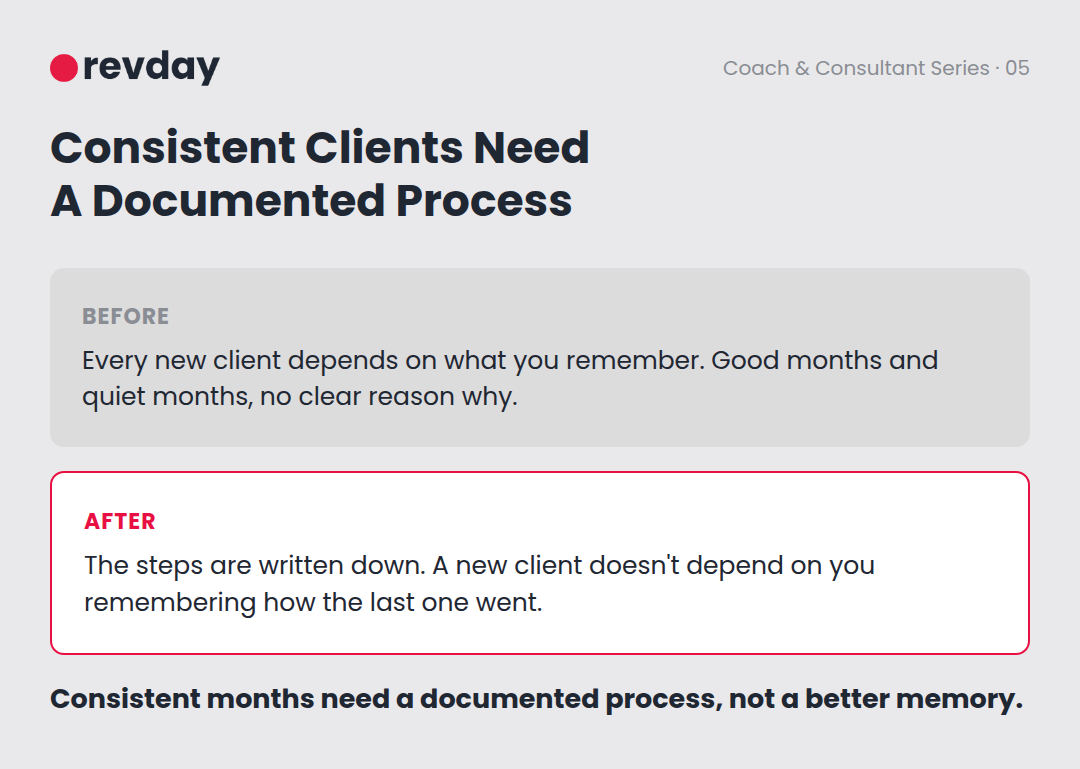
Usually it's because every part of getting a new client still runs through you personally, from the first message to the signed agreement, with nothing documented or repeatable in between. Christine put it plainly after fixing this in her own business: "I wish I had hired Noah from day one." Once the sales process is written down instead of carried in your head, consistent months stop depending on how good your memory was that week, and the mechanics of why are covered in why your income is inconsistent even with real clients.
Where This Actually Gets Built
None of this is one big overhaul. It's five specific gaps: your pricing, your pitch, your follow-up, your website, and your consistency once you're past the early stage. Fix them in order and growing a coaching or consulting business in Australia stops depending on which week it is.

