What Your Coaching Website Actually Needs to Sell
A consultant I spoke with had spent four thousand dollars on a website redesign the year before. It looked great, her bio was polished, and friends kept telling her how professional it looked. In the six months after launch, it booked exactly one discovery call, and that one came from a referral who would have called her anyway.
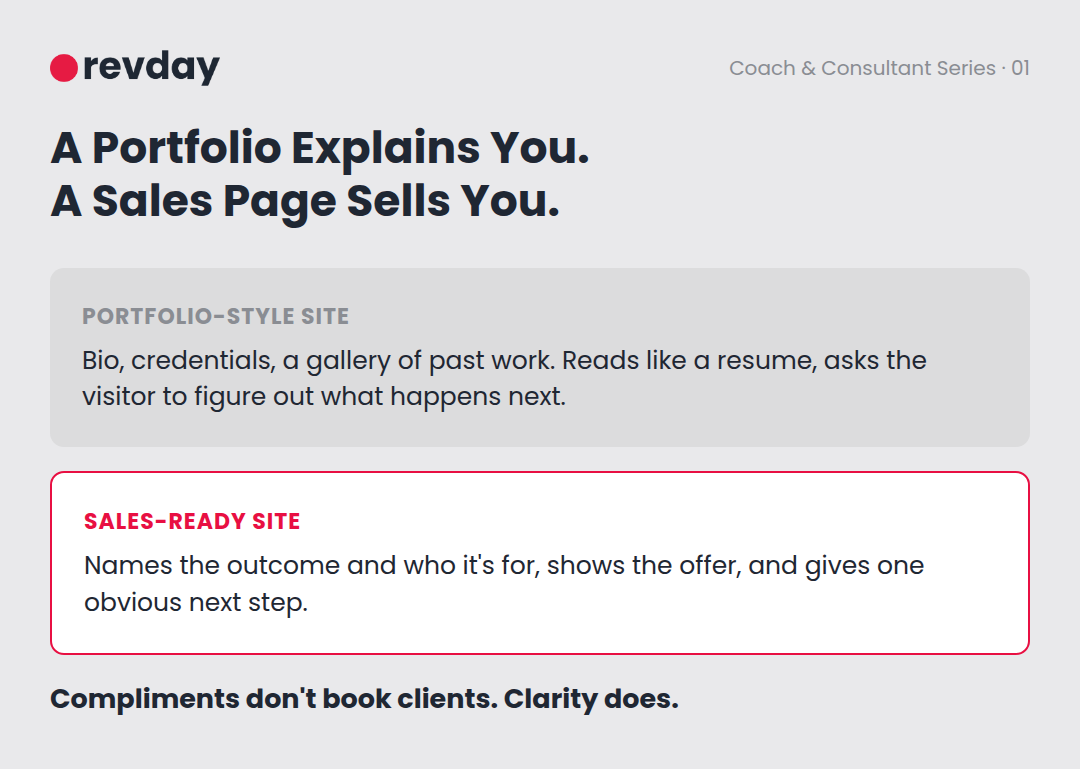
A website that gets compliments and a website that gets bookings aren't the same project, even though they can look identical from the outside. Most coaching and consulting sites are built like a portfolio: here's who I am, here's what I've done, here's a contact form if you're interested. That's a resume, not a sales conversation. And a resume asks the visitor to do the work of figuring out what to do next.
A Portfolio Isn't a Sales Page
The giveaway is usually the homepage headline. A portfolio site leads with a title like a job description: "Executive Coach" or "Business Consultant," followed by a paragraph about years of experience. A sales-ready site leads with the outcome: who it's for, and what changes for them, stated plainly enough that a stranger understands it in the first five seconds. Everything else on the page exists to support that first sentence, not replace it.
This matters most right after someone's been following up with you, the exact moment covered in how to follow up with leads when you're fully booked with clients. A warm lead who clicks through from a follow-up message and lands on a page that reads like a resume loses the momentum that message just built.
The Four Things a coaching Website Actually Needs to Sell
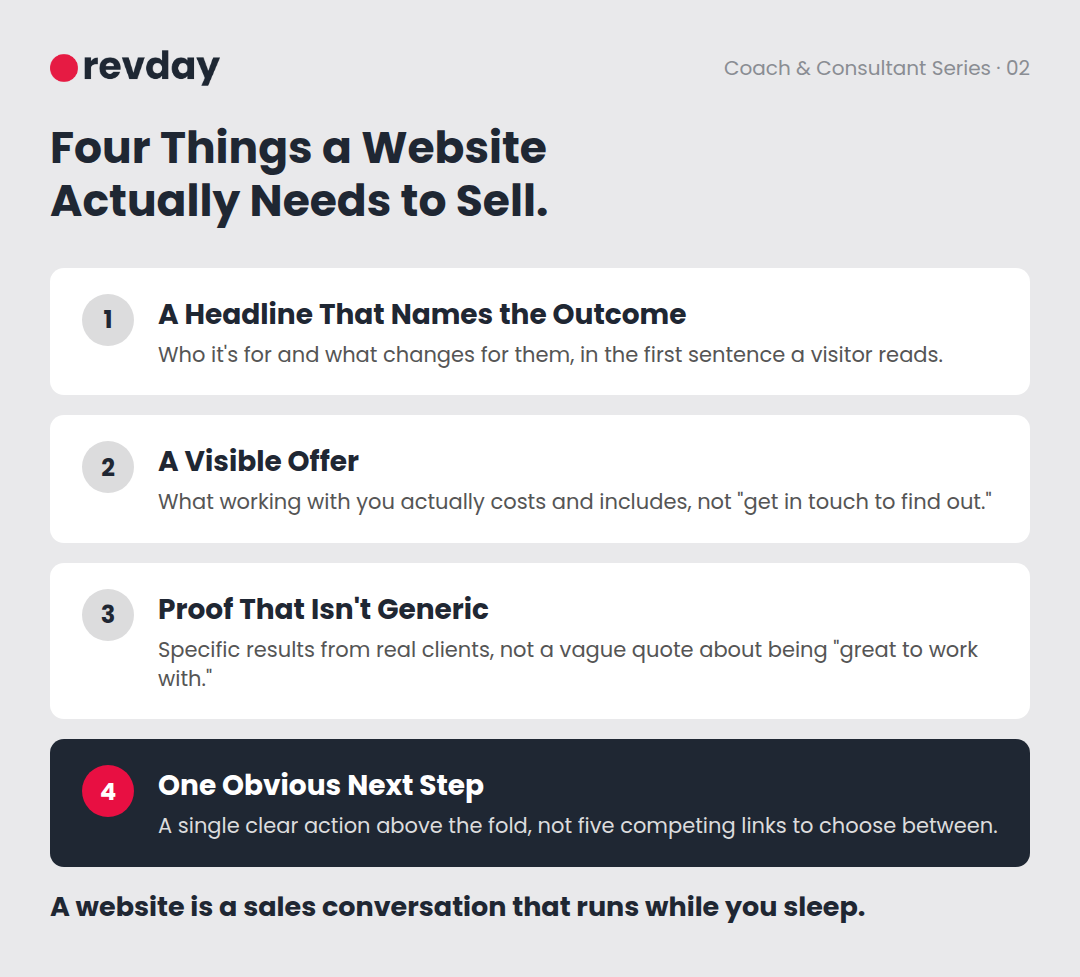
A website that actually sells needs four specific things, not a bigger portfolio. A headline that names the outcome and who it's for. A visible offer: what working with you costs and includes, rather than a form inviting someone to "get in touch to find out." Proof that's specific to real client results, not a generic quote about being great to work with. And one obvious next step above the fold: a single clear action, instead of five competing links asking the visitor to choose.
None of this replaces a real sales conversation, the one the pillar post on getting clients as a coach or consultant walks through in full. A good website just means fewer of those conversations start from zero.
How This Actually Gets Built
Getting the headline, offer, and proof right isn't a copywriting exercise you do in isolation. It comes out of the audience and messaging work built inside AIM, so the words on the page match how your actual clients describe their problem, not how you'd describe it to another coach.
Even a page that says all the right things still depends on what happens once someone acts on it. That's exactly where inconsistent income usually starts, and why your income is inconsistent even with real clients picks up from here.

