How to Follow Up With Leads When You're Fully Booked With Clients
I spoke with a consultant who had forty warm leads sitting in a spreadsheet the week her calendar filled up with client work. She told herself she'd follow up once things quietened down. Three months later the calendar was still full, the spreadsheet was still sitting there untouched, and half of those leads had already hired someone else.
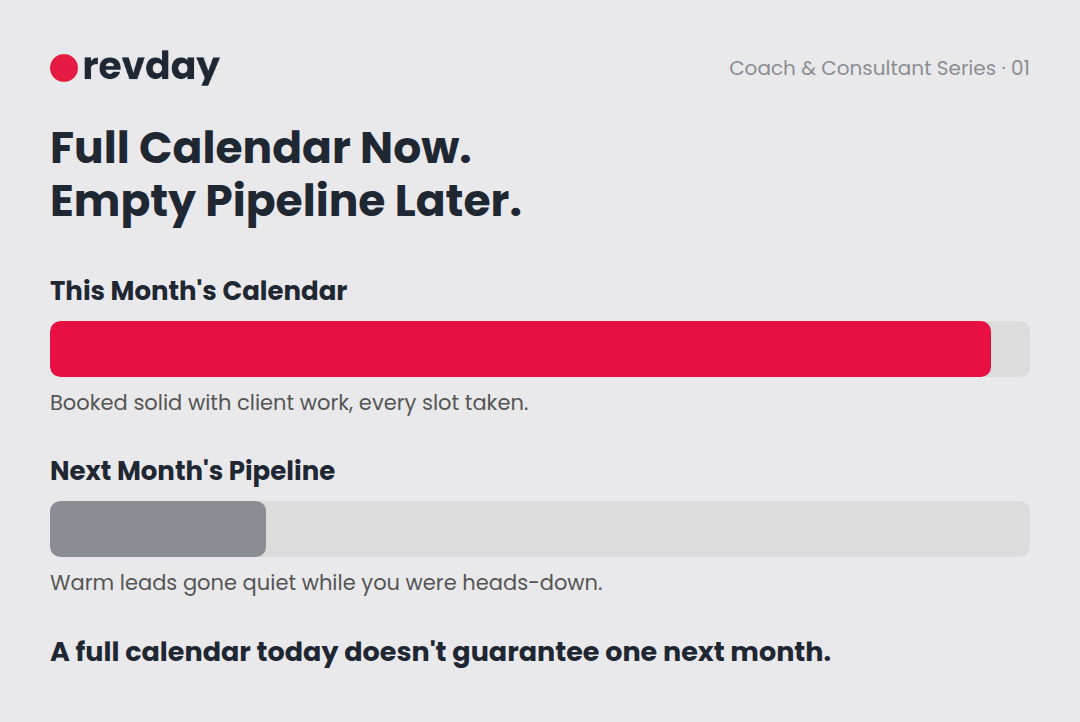
Being fully booked feels like the goal you were working toward, so it's easy to treat a full calendar as proof the pipeline can wait. It can't. Client work has a start date and an end date, and the leads who go quiet while you're heads-down with delivery are the leads who won't be there when a project wraps and the calendar opens back up.
Busy Now Doesn't Mean Booked Forever
Most coaches and consultants don't lose leads because the leads said no. They lose them because nobody said anything at all for six weeks, and silence reads as disinterest no matter which side it comes from. The result is a boom-and-bust pattern: a great month of client work followed by a scramble for the next one, because the pipeline that should have carried you through was left to go cold while you were busy delivering.
The fix isn't finding more time for follow-up. It's building a sequence that doesn't need you to remember it exists, the same way the pillar post on getting clients as a coach or consultant points out that a sales process only works if it runs the same way whether you're slow or slammed.
A Follow-Up System That Doesn't Need Your Attention
A follow-up sequence that survives a fully booked month has three things going for it. It's written in advance, three to five messages with an actual reason to reply beyond checking in. It runs on a schedule rather than a memory, going out on set days whether or not that lead crossed your mind. And it points somewhere specific: straight at an offer the lead can say yes to, not an invitation to start a new conversation from scratch.
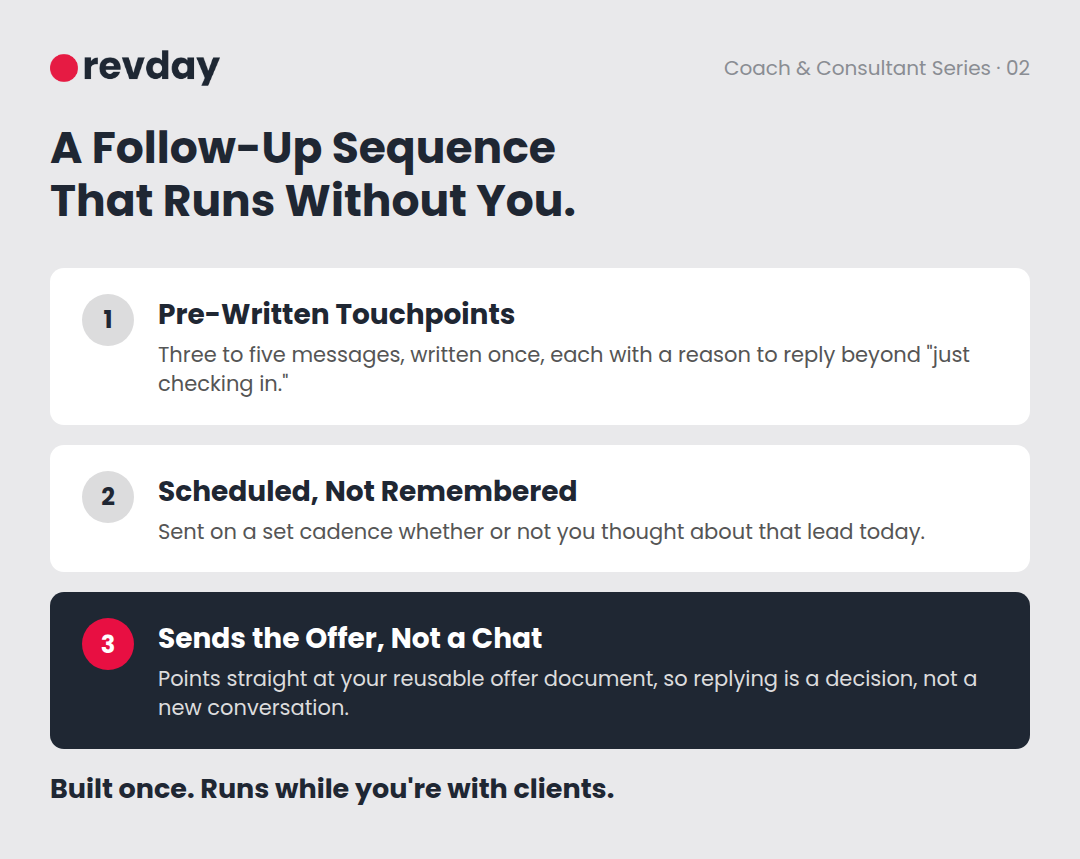
That last part matters more than it sounds. If every follow-up message has to restate your scope and price from memory, it'll keep getting postponed, because it takes real thinking time you don't have between client sessions. This is exactly why a reusable offer document is what a follow-up sequence should actually send. The lead gets a clear, consistent offer, and you don't have to write anything new to send it.
How This Actually Gets Built
Turning this into a sequence that runs on its own, written, scheduled, and tied to an offer that's already built, is part of what gets set up inside CSA. It's built once against your actual sales conversations, not a generic template with the blanks filled in.
Once leads are being followed up consistently, the next place they land matters just as much: what your coaching website actually needs to sell covers what a lead should find when a follow-up message sends them looking for more.

