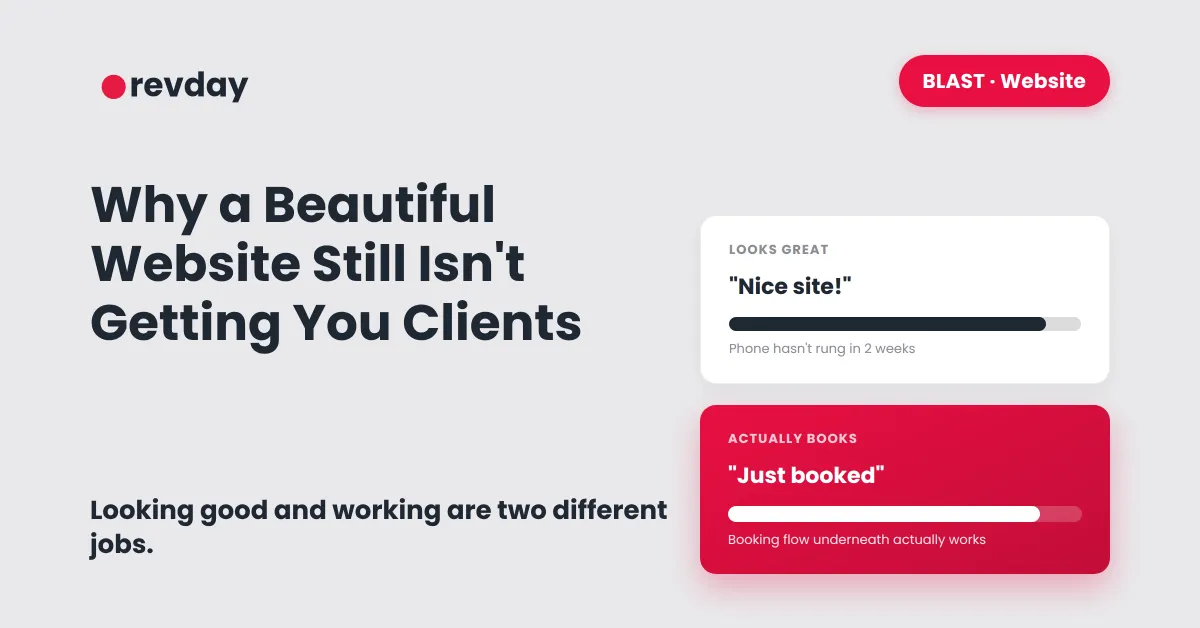
Why a Beautiful Website Still Isn't Getting You Clients
You did everything right. Decent photos, a clean layout, copy that sounds like an actual business instead of something thrown together in an afternoon. You were proud of it when it went live. Weeks later, the enquiries still aren't coming, and it's confusing, because by every visible measure, the website looks like it should be working.
It's rarely the design. The thing people blame first is almost never the actual problem. This is one piece of the bigger picture covered in what your service business website actually needs.
Looking good and working are different jobs
A website can be visually excellent and still fail completely at its one actual job, which is turning an interested stranger into a booked client. These are two separate problems, and most owners only ever address the first one, because it's the one they can see and judge for themselves. Nobody opens their own website and thinks "the booking flow underneath this looks broken," because from the outside, broken booking flows don't look like anything. They just look like silence.
This is part of why website copy itself often gets blamed when the actual issue is structural. The words can be perfectly fine and the page can still lose people if there's nowhere obvious or easy for them to go next.
Where the actual drop-off happens
Picture someone who's genuinely interested. They've read your homepage, they like what they see, and they've decided they want to find out more. This is the exact moment most websites quietly lose them.
Maybe there's no clear next step, just a generic "contact us" with no indication of what happens after. Maybe there's a contact form that doesn't say when you'll respond, so the visitor has no idea if they'll hear back in an hour or a week. Maybe the only option is calling a phone number, and they found your site at 9pm wanting to sort this out right now, not during business hours tomorrow.
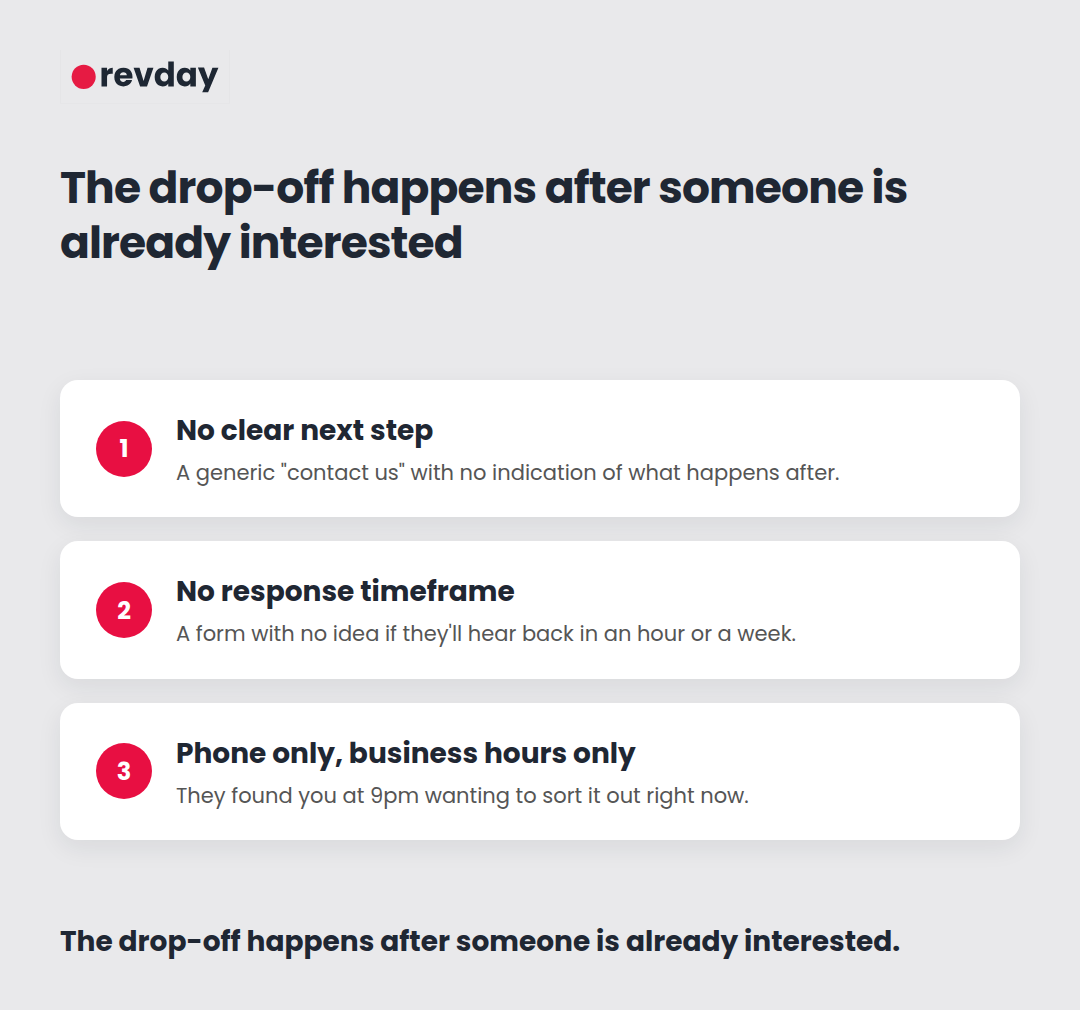
None of these are design problems. The page can look great while every one of these gaps is happening underneath it. The visitor doesn't leave because the website looks unprofessional. They leave because they got interested and then hit a wall.
Why this gets missed so often
Owners tend to look at their website the way a visitor looks at a shop window: does it look appealing? Does it represent the business well? Those are reasonable questions, but they're answering the wrong test.
The actual test is what happens in the thirty seconds after someone decides they're interested. Is there an obvious next step? Does taking that step feel fast and low effort? If a visitor has to fill in a long form, wait for a manual reply, or make a phone call during business hours, the website has already done its job of generating interest and then failed at the only part that turns interest into revenue.
This is the same gap covered in building lead forms that actually convert: a form that's slow, overly long, or unclear about what happens next quietly bleeds out leads who were ready to act and didn't get an easy way to.
The fix usually isn't a redesign
Most owners assume the answer is a new website. A new theme, new photos, a new colour scheme. Sometimes that helps a little. It rarely fixes the actual problem, because the actual problem usually isn't visual.
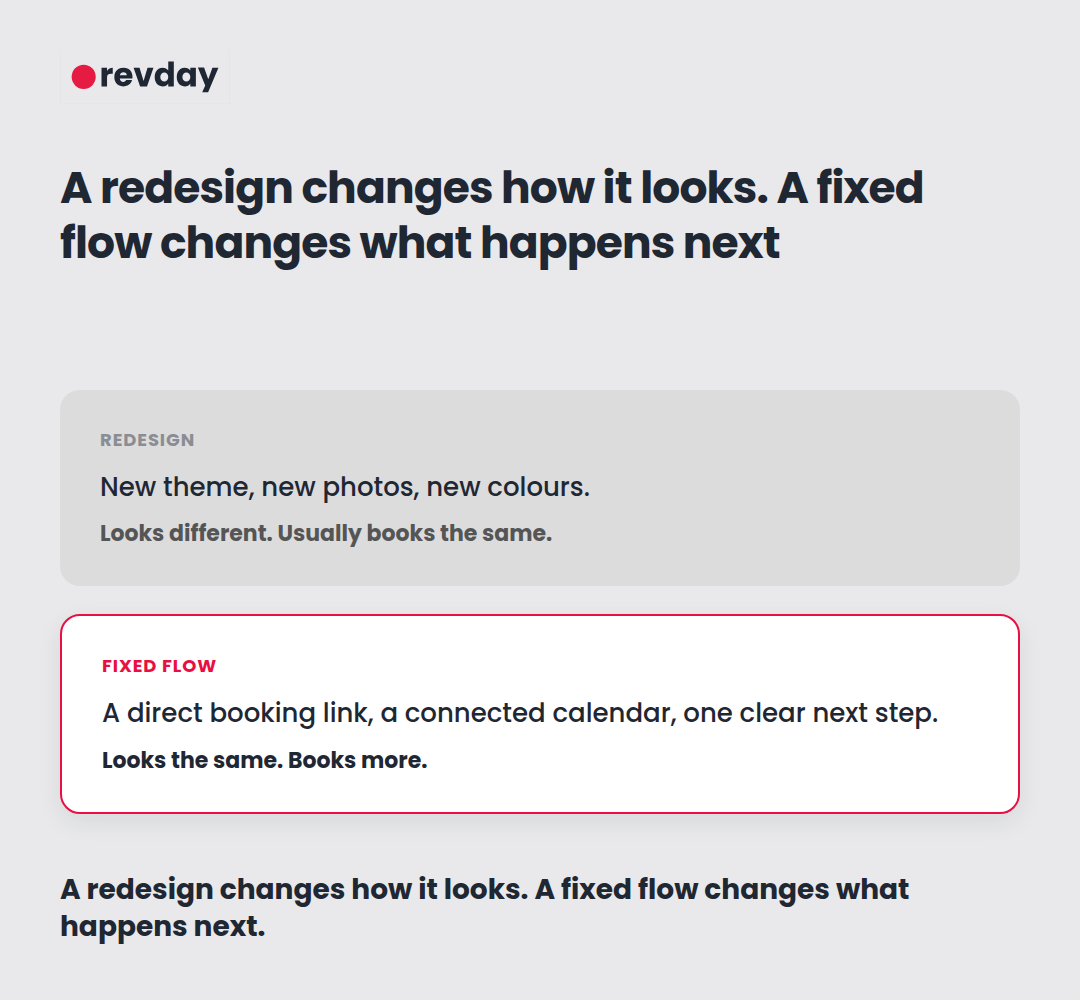
The more effective fix is almost always smaller and less visible: a booking link that goes straight to a calendar instead of a contact form, a calendar that's actually connected and automated instead of "we'll get back to you," and a clear single next step instead of three vague options. None of that requires touching the design. It requires fixing what happens after someone clicks.

