Why Your Website Copy Isn't Converting Visitors
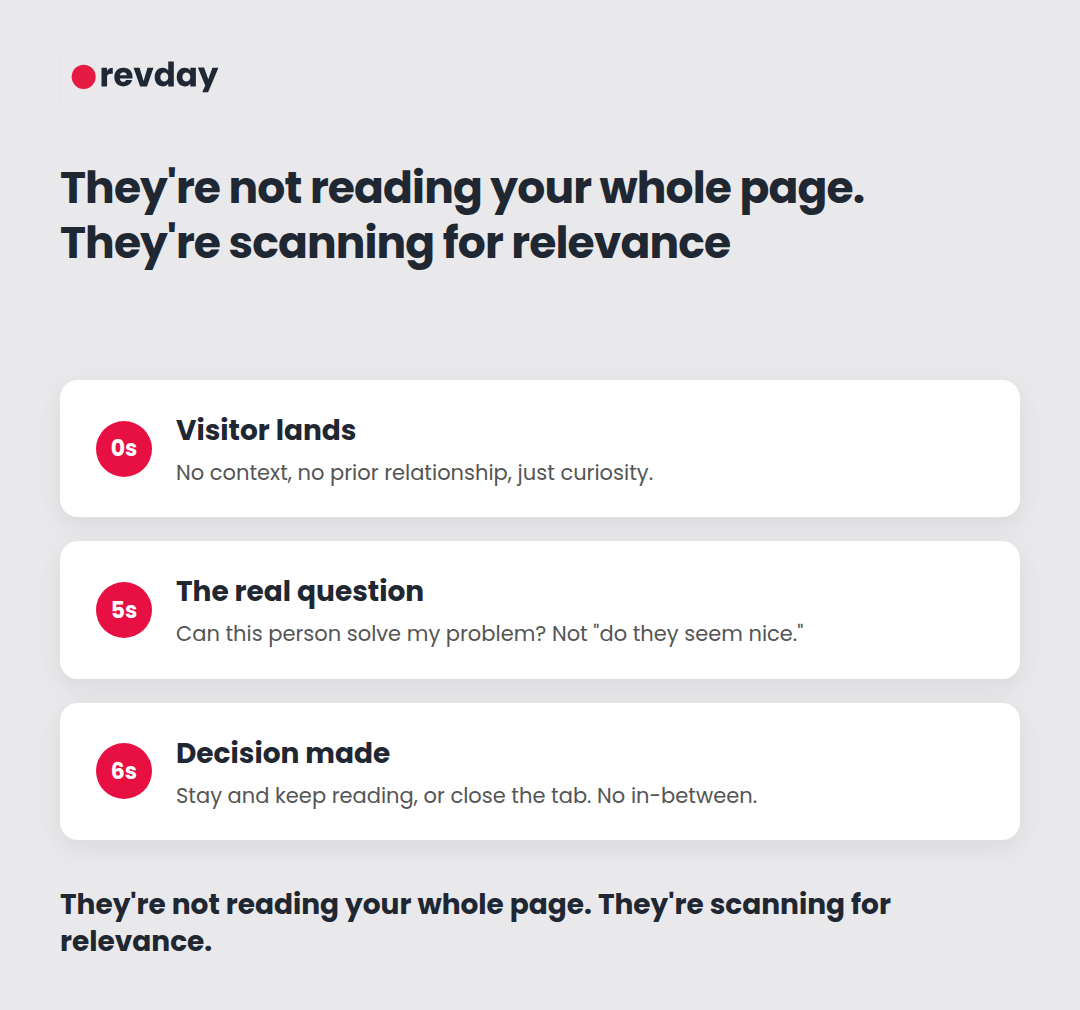
Someone lands on your homepage. They've got about five seconds before they decide whether to keep reading or close the tab. In that window, they're not evaluating your years of experience, your process, or how nice your photos are. They're asking one question: can this person solve my problem?
If the answer isn't obvious almost immediately, they're gone. Not because they didn't like you. Because they couldn't tell fast enough whether you were relevant to them.
This is a different problem to the booking flow gaps covered elsewhere. A broken booking flow loses people who were already interested. Bad copy loses people before they ever get that far, because they never became interested in the first place.
The five second test most copy fails
Read your own homepage headline out loud. Does it say who you help and what you actually do, in a way a stranger would understand without context? Or does it sound like it could describe ten other businesses just as easily?
"We provide tailored solutions for your business needs" tells a visitor nothing. It could be a plumber, an accountant, or a marketing agency. The visitor isn't going to do the work of figuring out which one you are. They'll assume you're not specific enough to be the right fit and move on to someone who is.
This is exactly why getting clear on who you actually serve has to happen before writing a single word of copy. Vague copy is almost always a symptom of an unclear offer, not a writing problem. If you haven't decided exactly who this is for, the copy can't say it clearly, because there's nothing specific to say.
Specific beats clever every time
A lot of website copy tries to sound impressive instead of sounding clear. Phrases like "elevating your business" or "unlocking your potential" feel like they're saying something, but they don't tell a visitor anything concrete about what actually happens if they hire you.
Compare two versions of the same sentence. "We help businesses optimise their operations for growth" versus "We set up your booking and payments so jobs get confirmed and paid without you chasing anyone." The second version is longer and less polished sounding, and it converts better, because a visitor can immediately picture what they'd actually get.
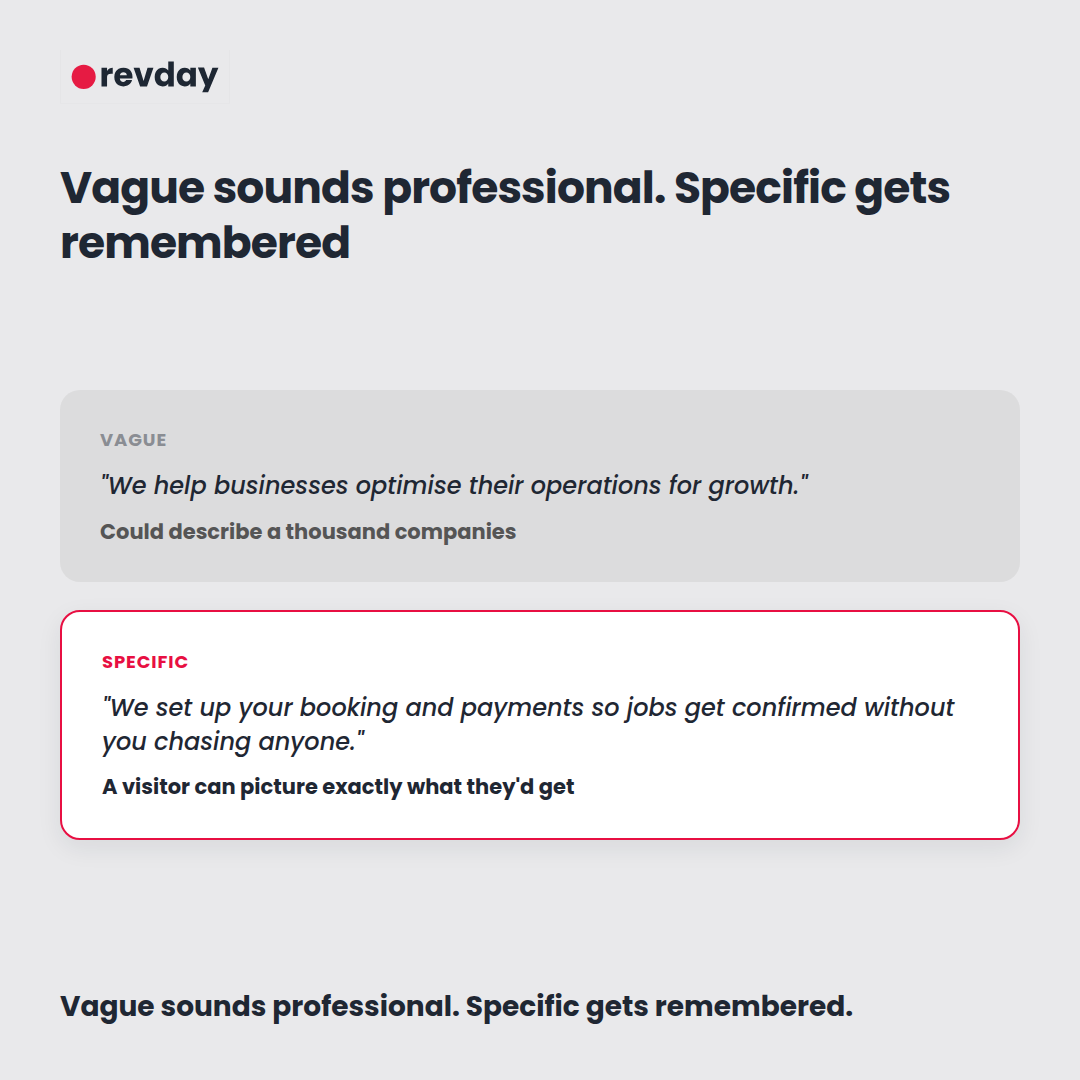
Specificity feels like a risk because it narrows who the copy speaks to. That's exactly why it works. Copy written to appeal to everyone ends up feeling relevant to no one, while copy written for one clear type of client makes that exact person feel like the page was written specifically for them.
Where this connects back to the offer itself
Copy can't manufacture clarity that doesn't exist somewhere upstream. If the actual service or offer is still a bit fuzzy, no amount of clever wording on the website is going to compensate for that. The words can only describe what's already been decided. They can't decide it for you.
This is why fixing website copy in isolation often doesn't move the needle much. The real fix usually starts one step earlier, with a clear, specific answer to who this is for and what they actually get, and the copy just needs to state that plainly once it exists.
What actually changes when this is fixed
None of this requires clever writing or expensive copywriting. It requires being willing to be specific enough that the copy doesn't apply to everyone, because copy that applies to everyone converts no one.
A visitor who reads your homepage and immediately recognises themselves in it is a visitor who keeps reading. One who has to guess whether you're relevant to them usually doesn't bother guessing for long.

