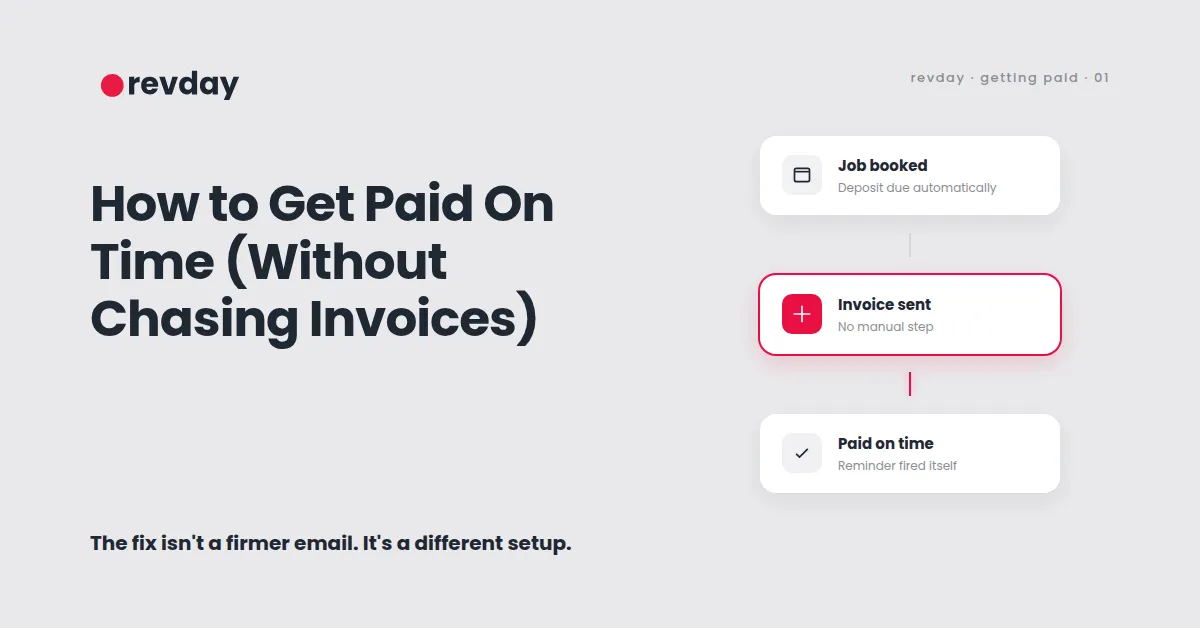
How to Get Paid On Time (Without Chasing Invoices)
A client pays late. You feel awkward chasing it. So you wait another week, hoping they'll just remember. They don't. Now it's three weeks overdue, you're annoyed, and sending the reminder feels even more uncomfortable than it did the first time.
Most service business owners think this is a them problem. Maybe they're too soft. Maybe they need to get tougher with clients, send sharper emails, stop being a pushover.
It's not a them problem. It's a setup problem.
If getting paid depends on you remembering to chase, feeling confident enough to ask, and hoping the client prioritises your invoice over everything else in their inbox, you've built a payment process that runs entirely on goodwill and memory. That works fine until it doesn't, and by then you've usually got three or four overdue invoices sitting there making you feel like a debt collector in your own business.
The fix is building the payment expectation into the relationship before the work even starts, then automating the parts that used to depend on you remembering. If you're still at the stage of getting your business foundations right, this guide on getting your first clients covers what should come before this.
Why "just send a reminder" doesn't fix it
Reminder emails treat late payment as an isolated event. Something went wrong this time, so you nudge, and hopefully it doesn't happen again.
But for most service businesses, late payment isn't isolated. It's the default outcome of how the business is set up. No deposit means the client has nothing on the line until the work is fully done. No clear payment terms mean the client genuinely doesn't know when you expect to be paid, so they pay whenever it occurs to them. No automated trigger means the invoice only goes out when you remember to send it, and the reminder only goes out when you remember that too.
Three gaps. All of them sitting upstream of the moment you're sending the awkward email.
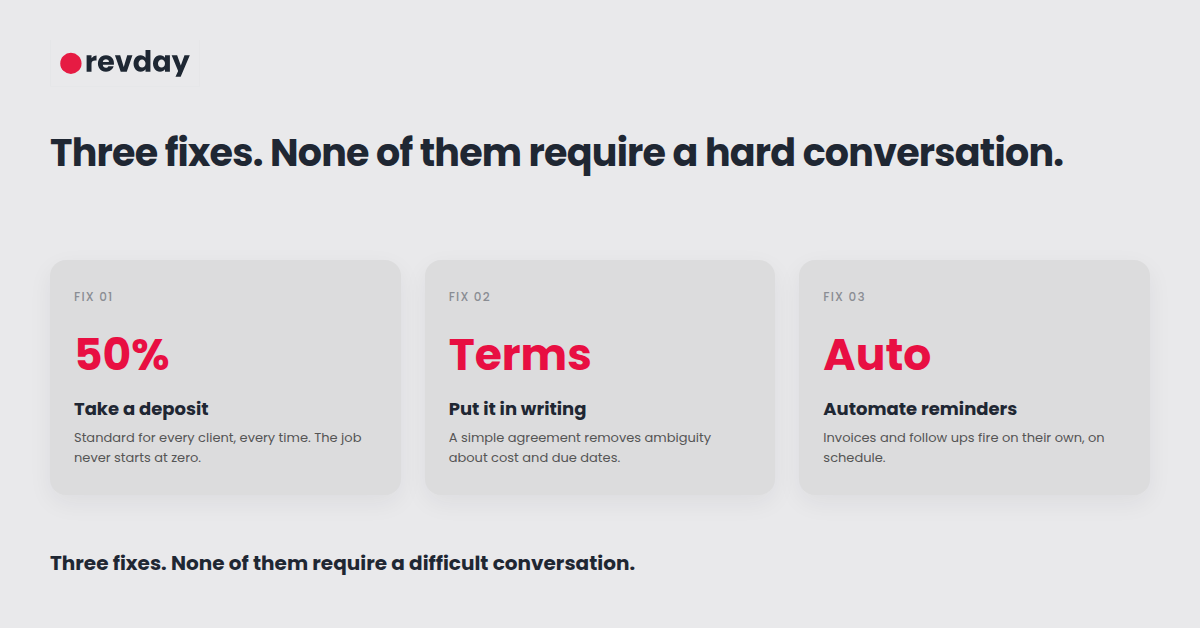
Fix those three things and the awkward email mostly stops being necessary. The client already knew the deposit was coming. The invoice went out the second the job was marked complete. The reminder fired automatically three days before the due date, from the business, not from you personally. This is how automating your sales pipeline stages pays off beyond just lead follow-up.
Fix 1: Take a deposit, every time
If a client pays nothing upfront, they have no skin in the game until the entire job is finished. That's backwards. You're the one taking on risk, doing the work, covering your costs, while the client decides later whether this was worth paying for promptly.
A deposit flips that. It's not about distrust. It's a normal part of how service businesses operate, and most clients expect it the moment you ask.
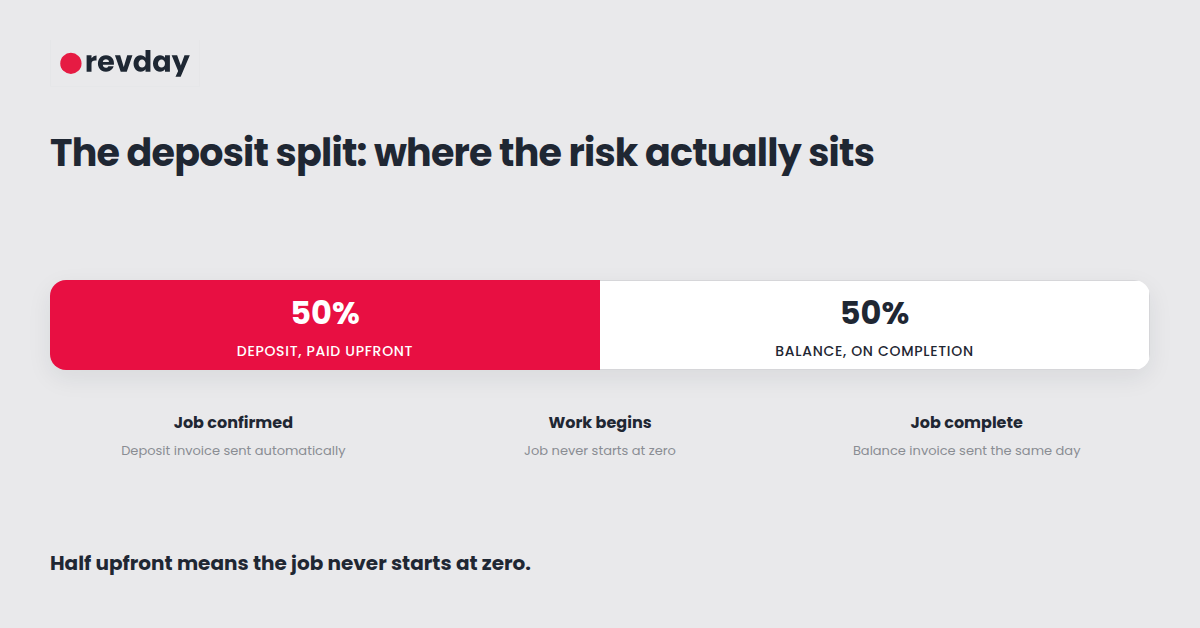
For a smaller job, 50% upfront is common. For larger or longer projects, a deposit plus milestone payments works better, so you're never carrying the full cost of unpaid work for weeks at a time. Read more on why deposits change everything for a new service business.
What matters more than the exact percentage is that it's standard. Every client, every time, stated clearly before the work begins. Not negotiated case by case depending on how the conversation goes. The moment it becomes negotiable, it becomes a thing you have to bring up awkwardly, which is exactly the dynamic you're trying to remove.
Fix 2: Put it in writing, before the work starts
A lot of service businesses operate on a verbal agreement and a vague sense of "we'll sort the invoice out after." That's fine right up until the client has a different memory of what was agreed than you do.
A simple written agreement, even a one page summary, sets out what's being delivered, what it costs, when payment is due, and what happens if it's late. This isn't about preparing for a fight. It's about removing ambiguity, because ambiguity is where late payments breed. It's also what turns a frictionless sales process into a frictionless client relationship.
When a client has agreed in writing that payment is due within seven days of invoice, a reminder on day five isn't an awkward ask. It's just the agreed process playing out. You're not chasing. You're following up on something they already signed off on.
Fix 3: Automate the invoice and the reminders
This is the part that actually removes the work from your plate.
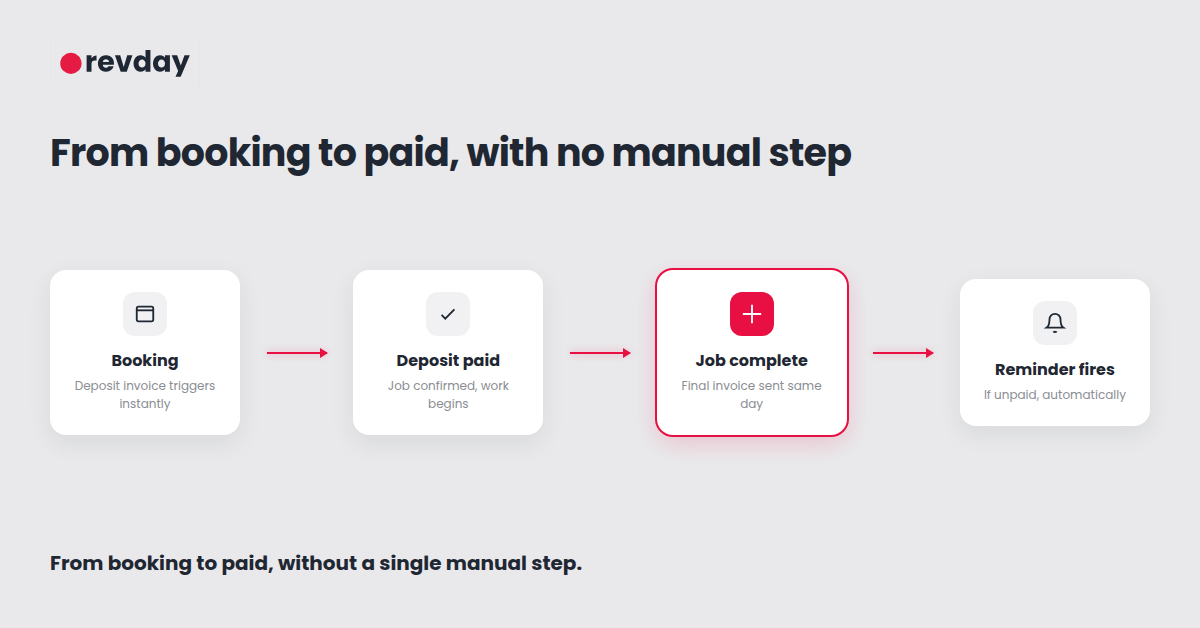
Once the deposit and terms are sorted, the rest should run without you touching it. The invoice goes out automatically the moment a job is marked complete, not whenever you get a spare twenty minutes to sit down and do admin. A reminder fires a few days before the due date, then again if it's overdue, without you having to decide each time whether today is the day you send the slightly awkward email. This pairs naturally with setting up automated invoice reminders that don't feel impersonal.
This is the difference between a payment process and a payment hope. A process runs the same way every time, whether you're busy, on holiday, or just don't feel like dealing with it that day. A hope depends entirely on your mood and your memory, which is why it breaks down exactly when you're busiest, which is exactly when cash flow matters most.
What this actually changes
None of this requires becoming a different person or having uncomfortable conversations you've been avoiding. It requires the business to be set up so those conversations mostly don't need to happen.
Deposit collected before work starts. Terms agreed in writing, so there's no ambiguity about what was promised. Invoice and reminders running on their own, triggered by the work itself rather than by you remembering. If you want to see how this fits into the broader picture of building a proper client onboarding process, that's the next piece worth reading.
The result isn't that every client suddenly pays the second the invoice lands. Some still won't. But the businesses that get paid on time consistently aren't the ones with the toughest owners. They're the ones where getting paid doesn't depend on the owner doing anything at all.
Want to go deeper? Read what to include in a service agreement even if you're solo, or find out how to make deposits standard from day one.