How to Get More Work as a Tradie (Without Relying on Word of Mouth)
Some months the phone doesn't stop. Other months you're watching it, waiting. If you've been running your own tradie business for longer than six months, that pattern is probably familiar.
Most tradies in that situation assume something is wrong with their approach, or with them. Usually, neither is true.
The feast and famine cycle that nearly every tradie goes through isn't a skill problem. The work you do is good. Your customers know it. The problem is that word of mouth, which is how almost every tradie starts out, is passive by design. When you're flat out, you stop looking for the next job. When it dries up, there's nothing already moving to replace it.
This guide covers what actuaHow to Keep Work Coming In When You're Buried on the Toolslly builds consistent work for a tradie business, why the approaches most tradies try first tend to fall short, and how to know where to start based on where you are right now.
Why Word of Mouth Stops Working
Word of mouth produces the best kind of lead. The customer already trusts you before they call. They're not shopping around or comparing three quotes on Hipages. They show up, the job is straightforward, and they usually pay on time.
The problem is the part you can't control.
A referral only happens when three things line up at once: the person you've worked for needs your trade again, they remember your name specifically, and they know someone who needs the same work done. Any one of those breaks and the referral never arrives. You did nothing wrong. You just weren't visible at the right moment.
Most tradie businesses follow a predictable pattern. In the first year or two, word of mouth spreads naturally because the jobs are recent and the people in your circle are still talking about you. Then it plateaus. The original group of people who know your work has been tapped. New customers start coming through people who've heard of you at two or three removes, and that flow is slower and less reliable.
That's not failure. That's what word of mouth does at a certain stage. The answer isn't just to do better work or know more people. The answer is to build something that keeps working when the referrals go quiet.
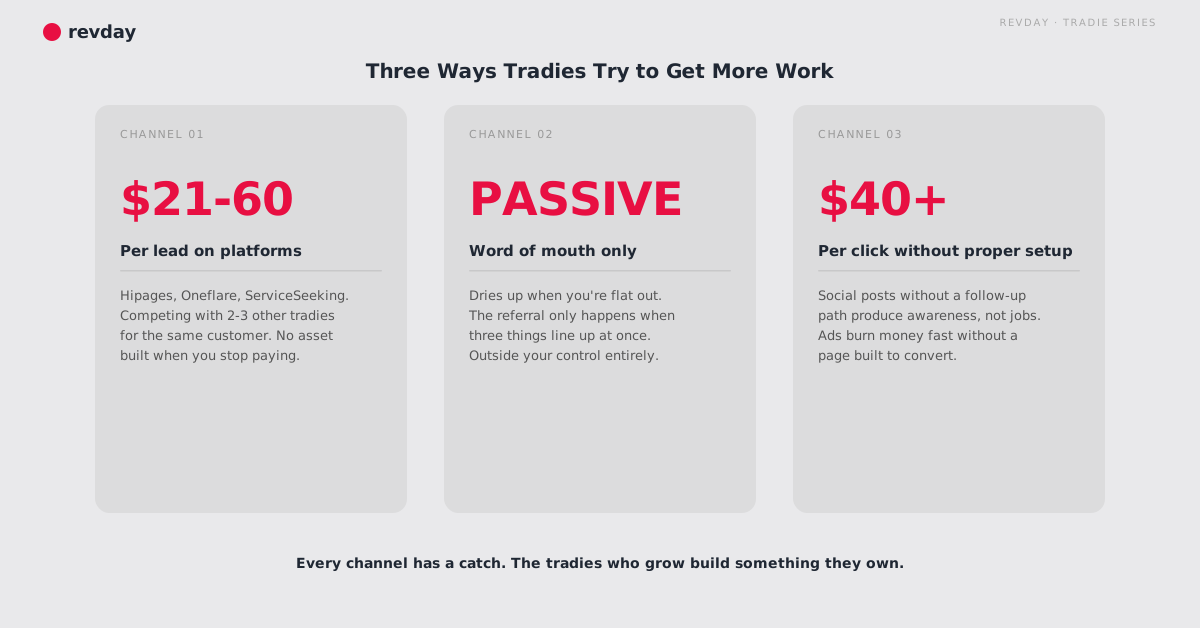
The Three Ways Tradies Try to Get More Work (and What's Broken About Each)
Most tradies who want more work aren't sitting around waiting. They've tried things. The problem usually isn't effort. It's that each of the most common approaches has a structural flaw that caps how far it can take you.
Lead platforms (Hipages, Oneflare, ServiceSeeking)
These platforms work until they don't. You pay per lead, you compete with two or three other tradies for the same customer, and by the time someone contacts you through a platform they've usually already decided what they're willing to spend. Industry figures put the cost at $21 to $60 per lead depending on the trade and location. Factor in conversion rate and the real cost per booked job is significantly higher.
The deeper problem: every dollar spent on these platforms builds the platform, not your business. The moment you stop paying, the leads stop coming. There's no asset being created.
For a full breakdown of what this actually costs and what to build instead, read Why Paying for Tradie Leads Is Costing You More Than You Think.
Social media without a follow-up path
Posting job photos builds name recognition over time. That has value. But without a clear path from post to enquiry to booking, most social activity produces awareness without producing jobs. The tradies who get consistent work from social have set up a proper response flow, not just a posting habit. A like does not pay a bill.
Google Ads or paid campaigns run without proper setup
Google Ads can work well for tradies because the intent is direct: someone typing "plumber Sydney" is ready to book. But a single click for competitive trade keywords in major cities can cost over $40. Run that spend into a website with no clear call to action and the money disappears before the first job comes in. Most tradies try it once, lose $500 to $800, and write the whole channel off. The channel isn't the problem. The setup was.
The pattern across all three: the gap usually isn't getting seen. It's what happens after the lead arrives. Most tradies send a quote and never follow up. The customer gets busy, forgets, or books whoever replied first. How to quote faster and stop losing jobs at follow-up covers this in detail.
What Actually Builds Consistent Work
The tradies with steady, predictable work aren't all doing something complicated. Most of them have three simple things working at the same time.
People can find them. When someone in their area searches for their trade on Google, they show up. Their Google Business Profile has recent photos of real jobs, genuine reviews, and accurate contact details. If someone hears their name second-hand and looks them up, there's something credible there.
What people find makes them want to call. A website that clearly says what they do, where they work, and what previous customers say about them. Social proof that removes doubt before the first conversation. A phone number and booking option that's easy to find on a phone screen. Most tradie websites don't do any of this. They were built cheap and they do nothing.
There's a way to follow up that doesn't rely on memory. Most tradies send a quote and then wait. Two days later they've moved on to the next job. The customer has gone quiet, not because they're not interested, but because life got in the way. A simple follow-up message two to three days after the quote goes out converts a meaningful number of those lost jobs back into work. Most tradies skip this because there's nothing in place to remind them.
None of these three things are technically complicated. But they need to be set up properly, not half-done, and they need to work together. That's where most tradie businesses get stuck.
The Two Stages of Getting More Work as a Tradie
Not every tradie business needs the same thing. Where you are now determines what to build first.
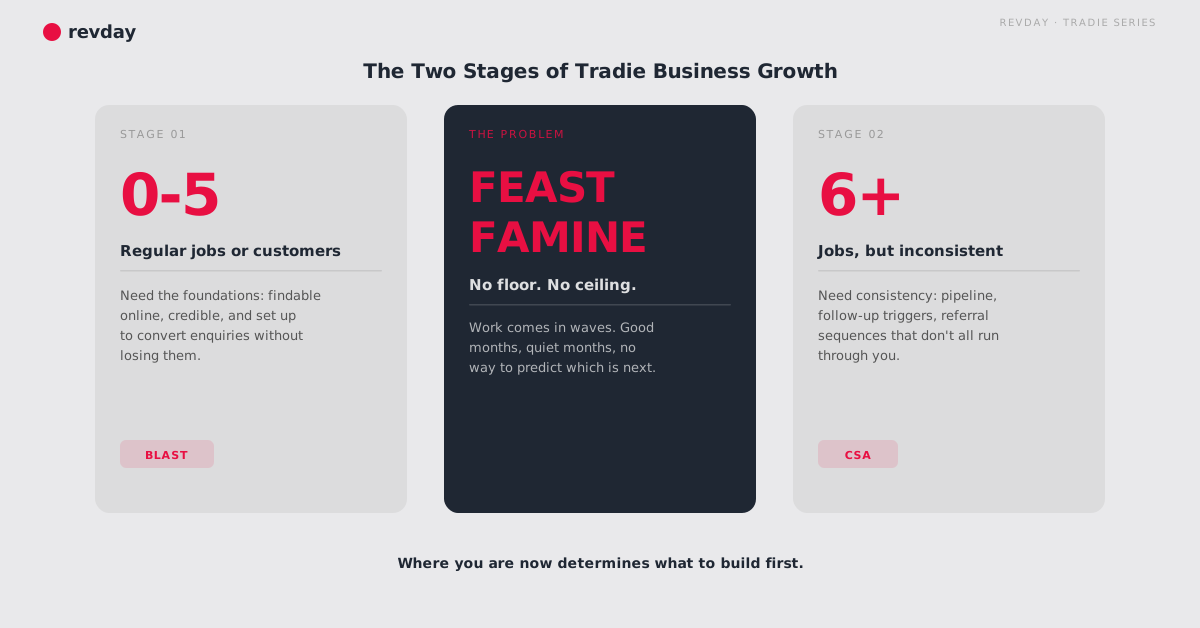
Stage one: fewer than five regular customers or jobs coming in
At this stage the main problem is that the foundations aren't in place. No website that actually works, no complete Google Business Profile, no clear way for a potential customer to find you online, check you out, and decide to call. Word of mouth is doing all the heavy lifting, and it's not enough volume on its own.
The work here is building what makes you findable and credible online, and setting up a simple way to handle enquiries and quotes without losing them. This is what the BLAST programme at revday covers. Done-with-you: revday builds it alongside you so you're not spending weekends figuring out website platforms and Google settings alone.
Stage two: six or more regular customers, but work is inconsistent
At this stage you've proven you can do the work. Customers come back. The problem is that everything still runs through you. You're the one following up on quotes, you're the one keeping track of which customers haven't heard from you in a while, and when you're on the tools all day, none of that actually gets done.
The inconsistency at this stage pipeline problem. Work comes in, you get flat out, you stop looking, and then there's a gap. The goal is building something that keeps running even when you're head-down on a job.
This is what the CSA programme covers. For a closer look at the specific problem of keeping work coming in when you're already at capacity, read How to Keep Work Coming In When You're Busy.
The feast or famine cycle that most tradies at stage two experience isn't random. There's a predictable reason it happens, and a straightforward way to break it.
What This Looks Like in Practice
At stage one:
A website that clearly lists what you do, the areas you cover, and what previous customers say. A Google Business Profile fully filled out with photos of at least five real jobs and a handful of Google reviews. A simple contact form or booking link that works on a phone screen. A quote follow-up that goes out two to three days after you send each quote.
Those four things alone put you ahead of most tradies in your area. The majority have either no website, a website that hasn't been updated in years, or a Google profile they set up once and never touched since.
At stage two:
A follow-up sequence for every completed job, not just a hope that satisfied customers will remember to call again. A prompt for a Google review built into the close of every job. A referral ask that goes out around 30 days after a job finishes. A clear view of which enquiries are open and which quotes haven't been accepted.
That last one is where most tradies at this stage lose the most work. Too busy to track what's sitting open. Enquiries get forgotten. Quotes sit unseen. The job goes to whoever followed up. How to build a referral trigger so customers come back and send others covers this in full.
How to Know Where to Start
The quickest way to understand which stage you're at and what to fix first is to take the Clarity Quiz. It takes about three minutes, asks the right questions about your current setup, and gives you a clear picture of where the gaps are.
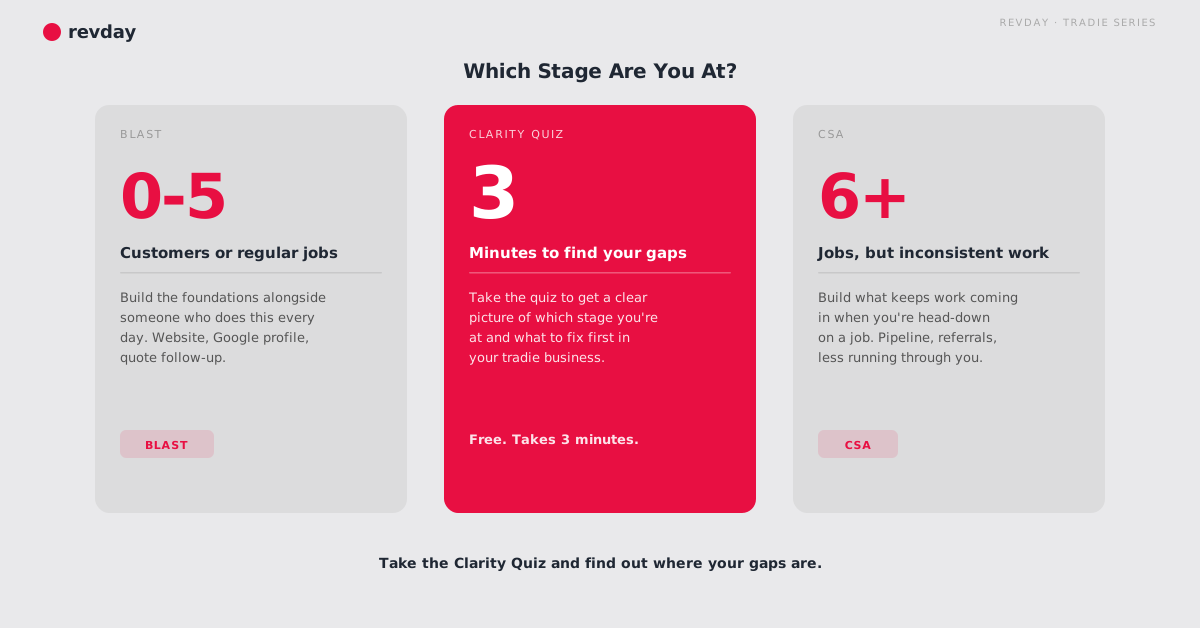
Most tradies who take the quiz already know something isn't working. They just don't know whether to fix their online presence, sort out quote follow-up, or build a referral trigger first. The quiz makes that clear.
Take the quiz here.
If word of mouth is the only thing bringing work in right now, that's the most important thing to change. Not because referrals are bad, but because relying on them alone means every quiet patch is a crisis rather than a manageable dip.
Frequently Asked Questions
How long does it take to get consistent work as a tradie?
For most tradies starting from close to scratch, three to six months of building the right things produces a noticeable difference in how reliably enquiries come in. The goal isn't a sudden spike in jobs. It's a steady floor that doesn't fall away when referrals go quiet.
Do I need to be good at marketing?
No. Most tradies who've built consistent work are not marketers. They've set up a handful of things that run without much ongoing attention. The goal is to build something that works while you're on the tools, not to add marketing to your weekly to-do list.
Is it worth leaving Hipages?
That depends on whether you've built something to replace it. The problem with Hipages isn't the leads themselves. It's depending on it with nothing else in place. Why Paying for Tradie Leads Is Costing You More Than You Think gives a full breakdown.
What if I'm already getting good referrals?
Only change something if you want the business to be predictable rather than dependent on timing. Referrals are the highest quality leads you can get. But they're unpredictable. The question is what happens to the business when they slow down. How to build a referral trigger so happy customers become a reliable source of new work covers exactly that.
The Short Version
Word of mouth built the business. It's not enough to grow it on its own.
The tradies with consistent, steady work have three things in place: they're findable, they look credible, and they follow up. None of that is complicated to set up. All of it takes some work to do properly.
The question isn't whether to build it. It's where to start.
Take the Clarity Quiz to find out where your gaps are.