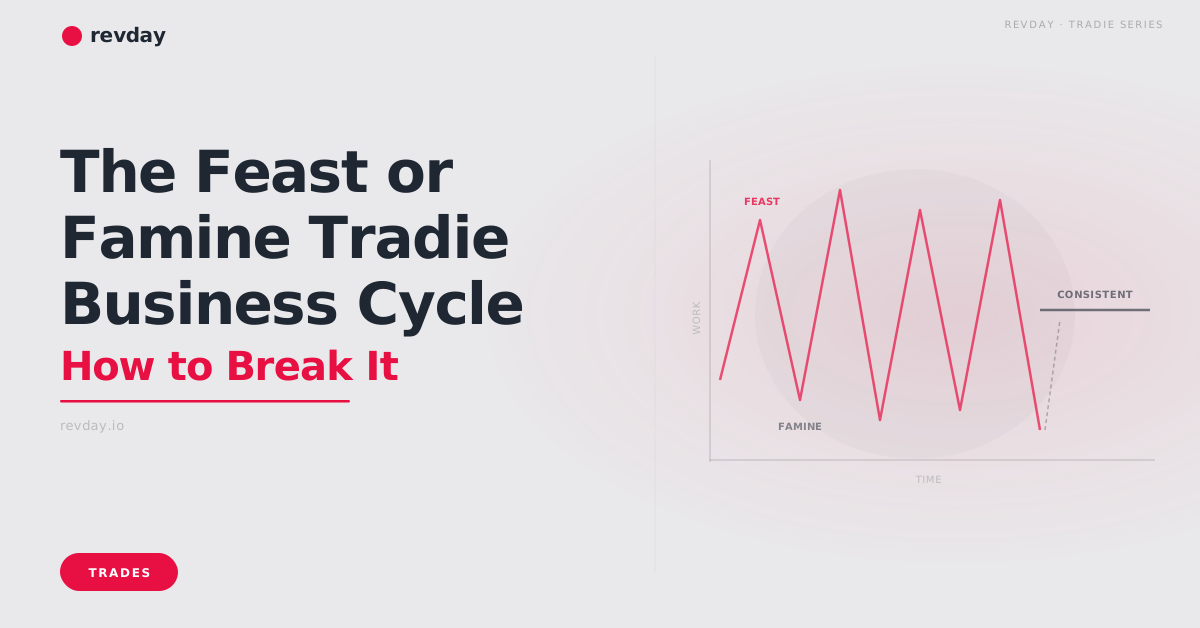
The Feast or Famine Tradie Business Cycle (And How to Break It)
Good month. Fully booked, phone going, knocking back work. Then it ends, and within a week the calendar looks thin.
Every tradie who's been running their own business for a while recognises this. What fewer of them know is why it happens with such regularity, and that it follows a predictable pattern with a specific cause.
The Mechanic Behind It
When a tradie is flat out, all their attention goes to the current jobs. Quoting happens late at night when there's time. Following up on open quotes doesn't happen. Enquiries take a day or two to get back to. The post-job check-ins to previous customers go out late or not at all.
None of this feels like a problem in a busy month because the calendar is already full. By the time the busy stretch ends, the pipeline has been neglected for three or four weeks. New enquiries are slower because response times slipped. Open quotes went cold because nobody followed up. Past customers didn't hear from you and called someone else for the repeat job.
The quiet month wasn't created by bad luck or the season. It was created during the busy stretch, when everything that feeds the pipeline got pushed aside.
What Busy Months Hide
A full calendar gives a tradie business the feeling of health even when the foundations are thin. Revenue is coming in, the phone is ringing, there's no reason to worry. What's not visible in that moment is whether anything is generating new work for six weeks from now.
Tradies who've broken the cycle describe the shift as learning to treat a quiet pipeline as a problem in the middle of a busy month, not at the start of a slow one. When you're fully booked and you notice no new enquiries came in this week, that's the moment to act. Not when the jobs finish and the calendar clears.
Three Things That Break the Cycle
The businesses that run consistently aren't doing more marketing than others. They have a short list of things running continuously, at a low level, that keep the pipeline moving regardless of how busy the month gets.
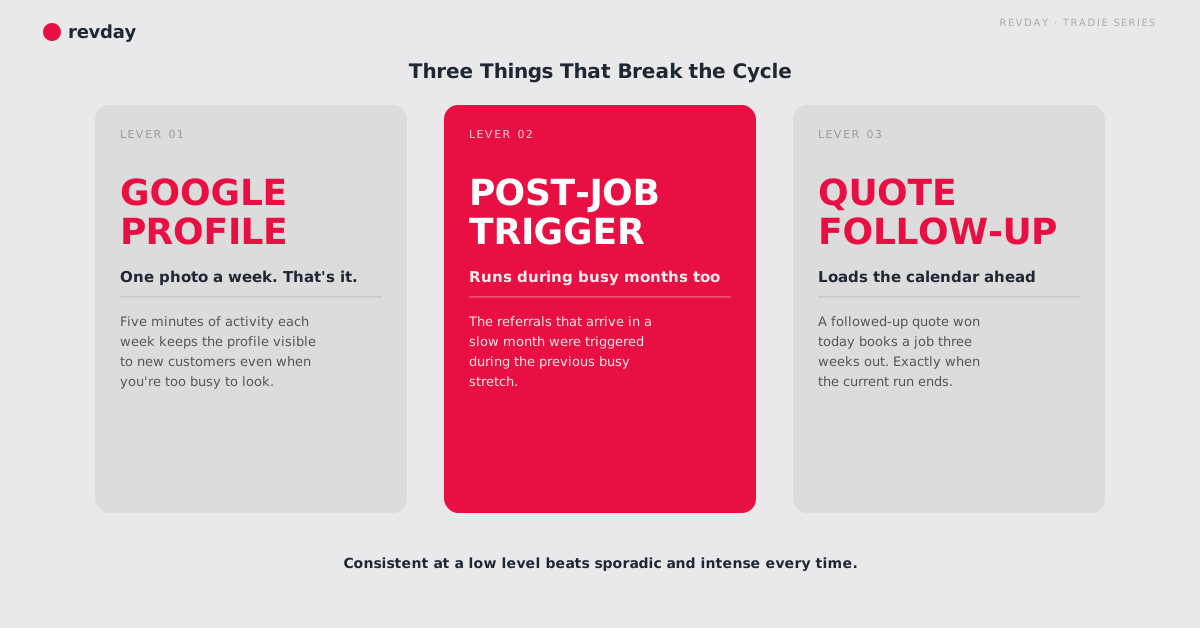
A Google Business Profile maintained with a low, steady input
A new photo of a completed job posted once a week takes five minutes. Over six months that's twenty-five photos and a profile that visually documents ongoing, varied work. Google rewards profiles with regular activity. New customers browsing local tradies see a business that's clearly active.
The tradies who get the most from their Google profile didn't build it once and walk away. They do a small amount consistently, which over time produces a profile that generates enquiries without effort. This ties directly into what's covered in Why Paying for Tradie Leads Is Costing You More Than You Think.
Post-job triggers that run regardless of how busy things are
The two-touch follow-up after every completed job, the check-in at day seven and the referral ask at day thirty, keeps past customers warm without requiring active attention. When it's automated, it runs during busy months and quiet months alike. The referrals that arrive during a slow patch were triggered during the previous busy stretch, which is exactly when you need them.
How to Get Repeat Customers as a Tradie covers the full setup.
Quote follow-up that doesn't depend on memory
An automated follow-up for every sent quote catches the jobs that go quiet during busy periods. When you're flat out and a quote goes unanswered, the follow-up still goes out at day two or three. The customer who hadn't booked anyone yet gets a message and responds. That job goes on the calendar for three weeks from now, right when the current run is winding down.
For the full quoting approach, read How to Quote Jobs Faster as a Tradie.
The Never-Go-to-Zero Rule
The feast or famine cycle is maintained by one behaviour above all others: going to zero on pipeline activity during busy stretches.
Tradies who stay busy throughout the year apply a version of the same rule without necessarily calling it anything. They never let a week go by, even a fully booked week, where nothing happened to generate future work. A photo posted. A quote followed up. A review requested. A past customer messaged.
Not all of these every week. Enough that the pipeline doesn't stall.
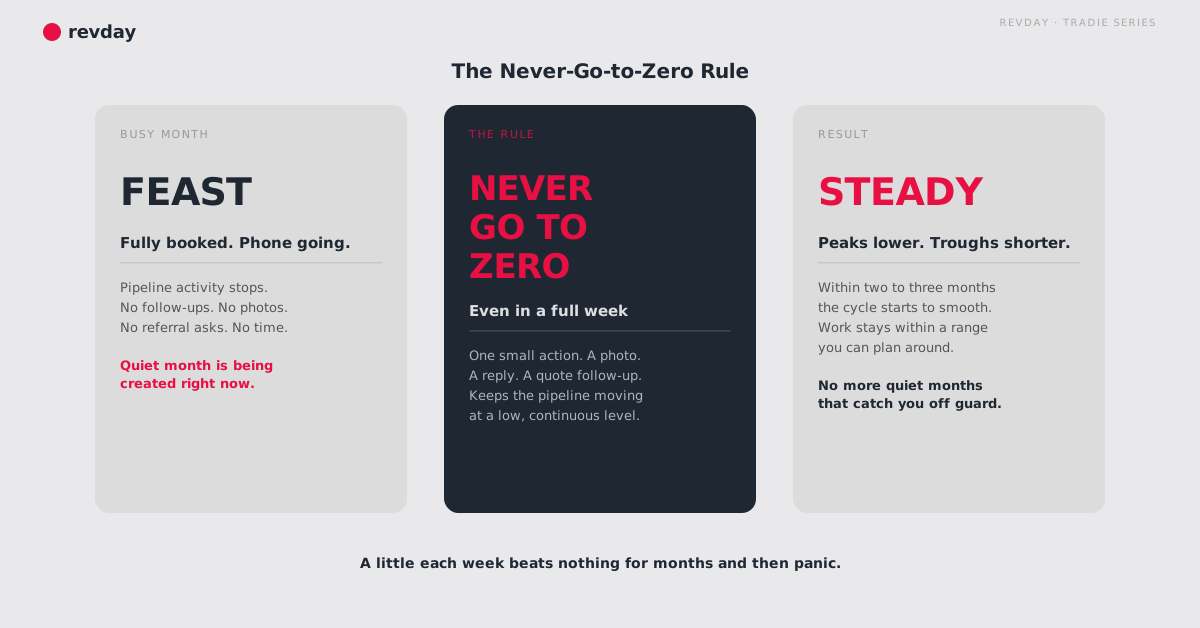
The thirty-minute Friday routine from How to Keep Work Coming In When You're Busy is the practical version of this rule.One short session a week keeps all three channels moving at a low level, which is enough to smooth out the peaks and gaps.
When that routine is skipped for three or four consecutive weeks because things got busy, the quiet month is already forming.
When the Cycle Runs Deep
For some tradie businesses, the feast or famine cycle isn't just about pipeline management. It's structural. The business is so dependent on the owner for quoting, for follow-up, for being the point of contact on every job, that when the owner is flat out on the tools, everything else stalls.
At that level, the Friday routine helps but it's not enough. What's needed is getting some of the admin weight off the owner so it can run even when they're head-down on a job.
That's the work the CSA programme at revday does. Not just automations and follow-up sequences, but building a business where the owner being on the tools for a week doesn't mean the pipeline goes untouched for a week.
Breaking the cycle starts with the habit covered in how to keep work coming in even when you're flat out: building the next booking before you need it, not after.
Where to Start
If this cycle is familiar, the three automations are the fastest lever: post-job trigger, quote follow-up, and Google profile maintenance. All three can be set up in a few hours and run continuously from that point.
After those are in place, the Friday routine keeps the pipeline from stalling during busy periods.
Take the Clarity Quiz to understand where the biggest gap is in your current setup. Three minutes, specific to where you are now.
For the full picture on building consistent work as a tradie, start at How to Get More Work as a Tradie.
Frequently Asked Questions
Is the feast or famine cycle worse for some trades than others?
Trades with longer job cycles, builders, kitchen and bathroom renovators, landscapers doing large installs, tend to feel it more sharply because each job takes longer and the transition between jobs is more visible. Trades with shorter job cycles, plumbers, electricians doing service work, cleaners, can still experience it but it shows up as patchy weeks rather than patchy months. The mechanic is the same either way.
What if my slow periods are genuinely seasonal?
Some seasonal variation is real: outdoor trades slow in winter, others ramp up before Christmas. Seasonal slowdowns still follow the same mechanic though. The gap is almost always worsened by reduced pipeline activity during the prior busy season. Getting the automations running before the busy season means they're working at full pace heading into the slow period, rather than starting from scratch when it arrives.
Can I break the cycle without spending money on advertising?
Yes. Every approach covered in this series works without paid advertising. The Google Business Profile, the post-job trigger, the quote follow-up, and the Friday routine are all zero ongoing cost once they're set up. Paid advertising can accelerate things but it's not required to break the cycle.
How long does it take to even out?
For most tradie businesses with the automations running and the Friday routine in place, the cycle starts to smooth within two to three months. The peaks get a little lower and the troughs get a little shorter. Full consistency, where work levels stay within a predictable range month to month, usually takes four to six months of running the pipeline without interruption.