How to Keep Work Coming In When You're Busy
Being flat out is supposed to be the goal. And it is, right up until the day the current jobs finish and you realise there's nothing lined up.
This is the trap most tradies at the six-plus customer mark fall into at some point. Work comes in, you get busy, you stop looking because there's no time to look, and when the current run ends there's a quiet patch that feels like it came out of nowhere. It didn't. The gap was created three weeks earlier when you were too busy to notice.
The problem isn't that you're not working hard enough. The problem is that all the things that bring in work, following up on quotes, staying visible to past customers, keeping the Google profile active, all require time and attention that a fully booked tradie doesn't have.
The answer is building things that run without your attention. Not apps you have to manage. Not a marketing strategy that needs three hours a week. Things that work while you're on the tools.
Why Busy Tradies Still End Up With Quiet Months
Most tradies who've been running for a few years have seen the pattern. A big job comes in. It runs long. Everything else waits. When it wraps up, the enquiry pipeline that would normally be moving has stalled completely because nothing was coming in during the job.
The mechanics are straightforward. Word of mouth keeps ticking over whether you're busy or not. But the things you can do to accelerate it, following up on open quotes, asking finished customers for referrals, responding fast to new enquiries, all take time you don't have when you're head-down on a job.
Research puts more than 78 per cent of Australian tradies as drowning in paperwork. Nearly 67 per cent report working weekends to stay on top of things. These aren't tradies who aren't trying. They're tradies who are doing everything manually, which means it only happens when they have time, and when they're flat out, they don't have time.
The tradies who avoid the quiet patches aren't doing more than everyone else. They've built a short list of things that run automatically, so the pipeline keeps moving whether they're working on a job or not.
If gaps keep showing up on a cycle rather than as one-off bad luck, that's a different problem worth understanding on its own: the feast or famine cycle and what actually breaks it.
Three Things That Keep Working While You're on the Tools
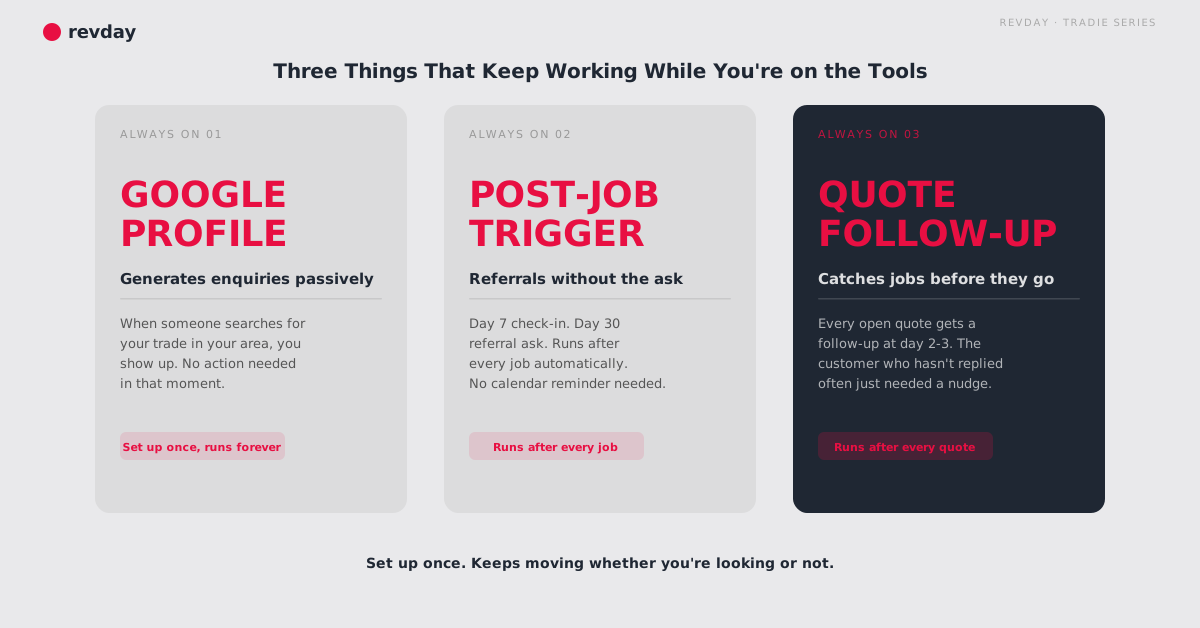
None of these require your attention once they're set up. All three are worth having in place before the next big job runs long.
A Google Business Profile that does its own work
A fully built-out Google Business Profile with genuine reviews generates enquiries passively. When someone in your area searches for your trade, you show up. You don't have to do anything in that moment. The profile is there, the reviews are there, and the customer calls.
The ongoing maintenance is minimal: add photos of completed jobs when you're already on site taking measurements, and respond to new reviews within a day or two. That's it. A profile with fifteen-plus reviews and regular job photos stays competitive without needing constant attention.
The post-job trigger
A two-touch message sequence set up to run automatically after every completed job keeps past customers warm and generates referrals without you having to remember. Day seven is the check-in. Day thirty is the referral ask. Once it's built, it runs after every job whether you're thinking about it or not.
This is covered in full in How to Get Repeat Customers as a Tradie. The short version: the tradies who consistently get referrals from past jobs don't rely on memory or manual follow-up. They have a trigger running in the background.
An open-quote follow-up
Every quote you've sent in the last two weeks that hasn't had a reply is a potential job still sitting there. An automated follow-up, sent two to three days after the quote goes out, catches those jobs before the customer books someone else. This runs without you having to check a list or set a calendar reminder.
For the quoting side of this in more detail, read How to Quote Jobs Faster as a Tradie.
The 30-Minute Friday Routine
Automation handles most of it. What it doesn't handle is making deliberate decisions about the pipeline: checking whether there are open quotes sitting unanswered, confirming the next two weeks are actually booked, and doing a fast review of whether any past customers are due for a check-in.
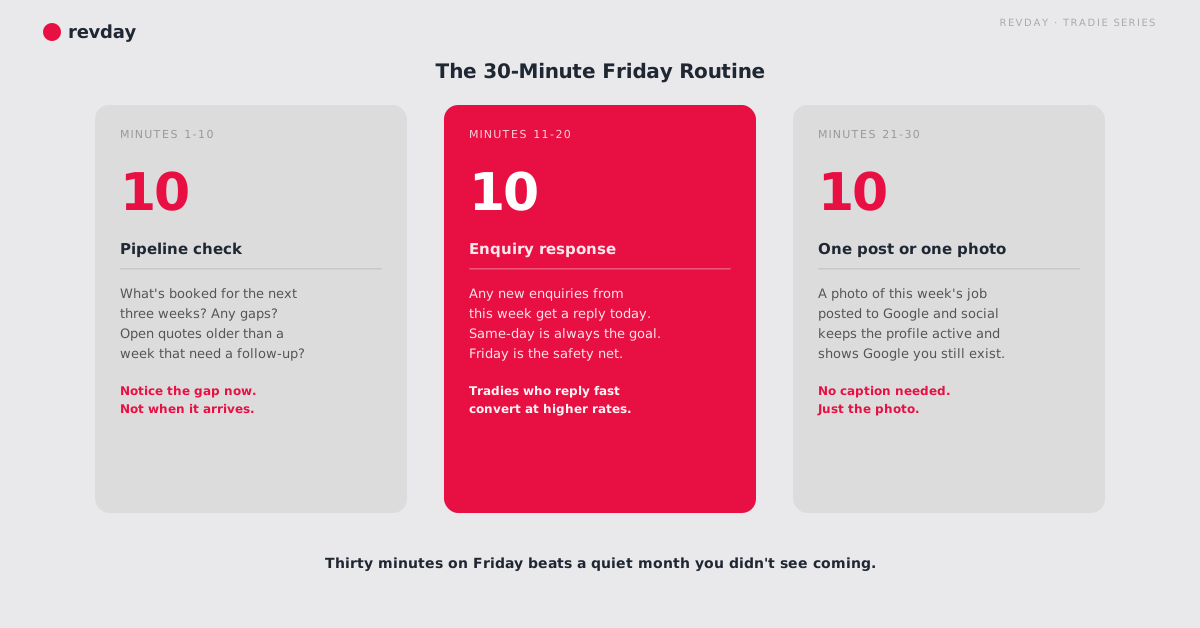
This doesn't take long when it's a routine. Most tradies who get this right spend about thirty minutes on a Friday doing three things.
Ten minutes: pipeline check
Look at what's booked for the next three weeks. If there's a gap, now is the time to notice it and respond, not when it arrives. Check whether any open quotes are more than a week old and haven't been followed up. A quick message to those customers takes five minutes.
Ten minutes: enquiry response
Any new enquiries that came in during the week get a response today. Tradies who respond to enquiries within the same day convert at a significantly higher rate than those who reply a day or two later. Batching responses into a Friday routine is better than missing them entirely, though same-day is always the goal.
Ten minutes: one social post or one photo
A single photo of a completed job posted to Google and social media keeps you visible to new customers and signals to Google that the profile is active. It doesn't need a caption. A before-and-after from that week's job takes five minutes to post and compounds over time.
That's the whole routine. Thirty minutes. The tradies who skip it are the ones who discover the quiet patch on a Monday with nothing booked for two weeks.
When You Need More Than a Routine
The three background automations and the Friday routine handle most of the pipeline for a tradie with six to fifteen customers at any one time. When the business gets bigger, or when the owner is so consistently on the tools that even thirty minutes a week feels impossible, that's usually the signal that something needs to change structurally.
At that point the question becomes: what parts of this can someone else handle? Not the trade work. The enquiry response, the quote follow-up, the scheduling. Most tradies at this stage aren't thinking about hiring admin help because it seems like a big step. In practice, even a few hours a week of admin support recovers more in won quotes than it costs.
This is the territory the CSA programme at revday is built for. Not just the automations, but the bigger question of how to build a business that doesn't completely depend on the owner being the one who keeps it moving.
For the wider context on consistent work and what the feast or famine cycle actually comes from, read How to Get More Work as a Tradie.
Where to Start
If you're currently fully booked and not thinking about next month, this week is the right time to sort the automations. Not next month when it's quiet.
Start with the post-job trigger and the open-quote follow-up. Both can be set up in a few hours. Once they're running, add the Friday routine. Within four to six weeks you'll have a clearer picture of how much of the pipeline was slipping through gaps that are now being caught automatically.
The Clarity Quiz takes three minutes and gives you a read on which of these gaps is costing you the most work right now.
Frequently Asked Questions
I'm a sole trader. Is any of this realistic without more hours in the week?
The goal is to reduce the hours this takes, not add to them. The automations, once built, don't need ongoing time. The Friday routine replaces the scattered, reactive admin that most sole traders do throughout the week in a less organised way. Most tradies who set this up find they spend less total time on pipeline management, not more.
What if I can't afford a quiet month right now?
That's exactly the situation where building these things is most urgent. A quiet month is expensive in lost revenue and momentum. The automations are a one-time investment of a few hours. The Friday routine is thirty minutes a week. Neither is expensive relative to what a two-week quiet patch costs.
How do I know if my Google profile is doing enough?
Check how many profile views and calls you're getting each month through the Google Business Profile dashboard. If you're getting fewer than ten calls a month from the profile and you're in a populated area, there's a gap to close. More photos and more reviews are the two most direct levers.
When should I start thinking about getting admin help?
When you're consistently unable to respond to enquiries within the same day, when open quotes are sitting for a week without follow-up, or when the Friday routine isn't getting done. Any of those three signals means the admin load has outgrown the time you have for it.