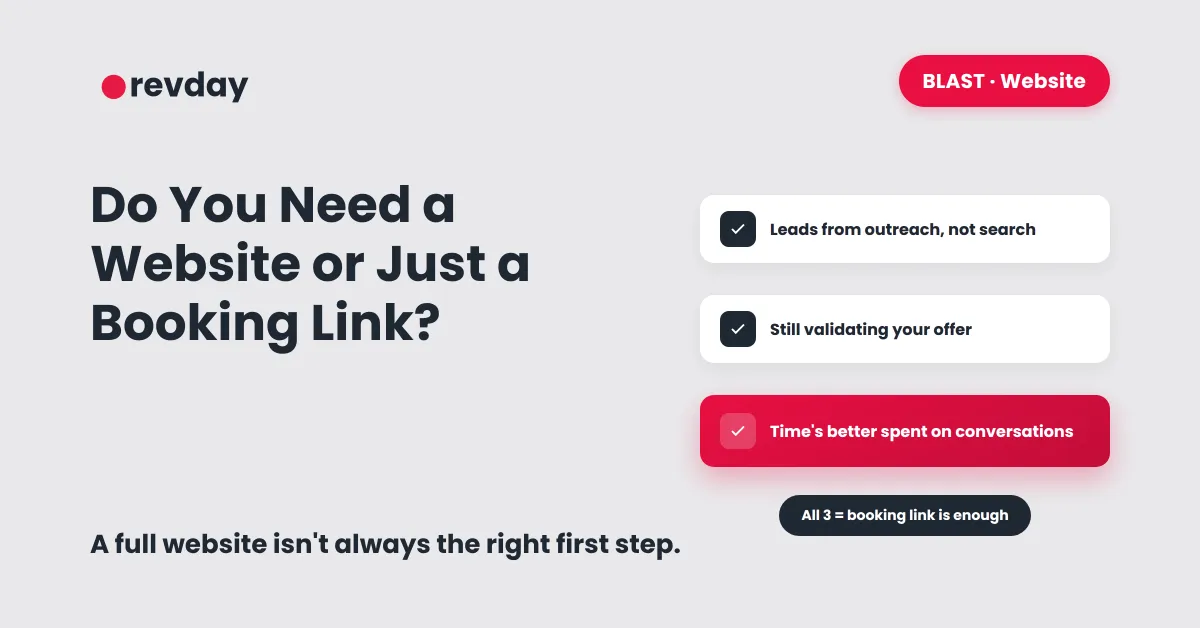
Do You Actually Need a Website Yet, or Just a Booking Link?
You've decided to start your service business. Now you're looking at website builders, pricing packages, design options, and the creeping sense that before you speak to a single client, you need to have all of this sorted.
Here's what's actually true: the first thing a new service business needs from the internet is a way for interested people to book a time with you. That's it. A full website does more than that, but at the start, it's often overkill for where you are.
When a booking link is genuinely enough
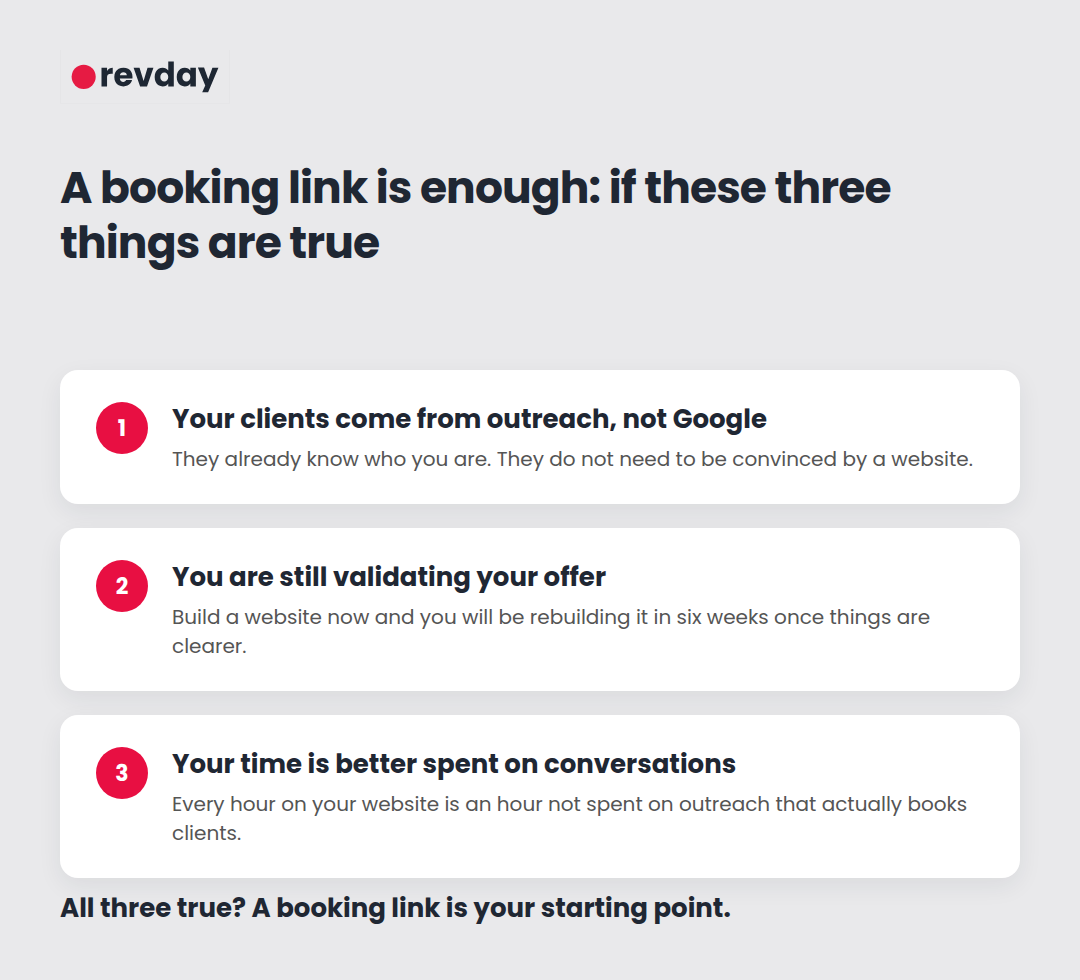
A booking link on its own is enough to start with if three things are true at once.
You're getting clients through outreach or referrals, not through organic search. If your first clients are coming from people you know, LinkedIn, cold email, or word of mouth, they don't find you through Google first. They already know who you are when they arrive. A booking link gives them the one thing they need: a way to lock in a time. They don't need to be convinced by a website because the convincing already happened in the conversation that sent them there.
You're still validating your offer. If you're not certain yet exactly who you help, what you charge, or how you describe what you do, building a full website right now just means rebuilding it in six weeks. The minimum viable setup for a new service business is intentionally light for this reason: get the essentials working before you invest in the parts that only matter once you have something worth presenting.
Your time is better spent on conversations than on pages. Every hour spent picking fonts, writing an About page, and arguing with a page builder is an hour not spent doing outreach. Getting your first five clients comes from conversations, not from having a website that no one is visiting yet.
If all three of those apply to you right now, a booking link and a professional email address are a better starting point than a full website build.
What a booking link actually needs to do
A booking link is not just a calendar. It's a mini sales page in a single step.
For it to work on its own, it needs to show what someone is booking (a discovery call, a quote call, a strategy session), how long it runs, and what happens immediately after they book. A confirmation email that tells them what to expect next is the difference between a booking that converts and a no-show who forgot what they signed up for. The calendar automation post covers the right booking types to set up and what each one should collect before the meeting.
What it doesn't need at this stage: a logo in the header, client testimonials, a services breakdown, a pricing page. Those things matter, but they matter more once people are finding you through search, not through a direct message or a warm introduction.
When you actually need to build the website
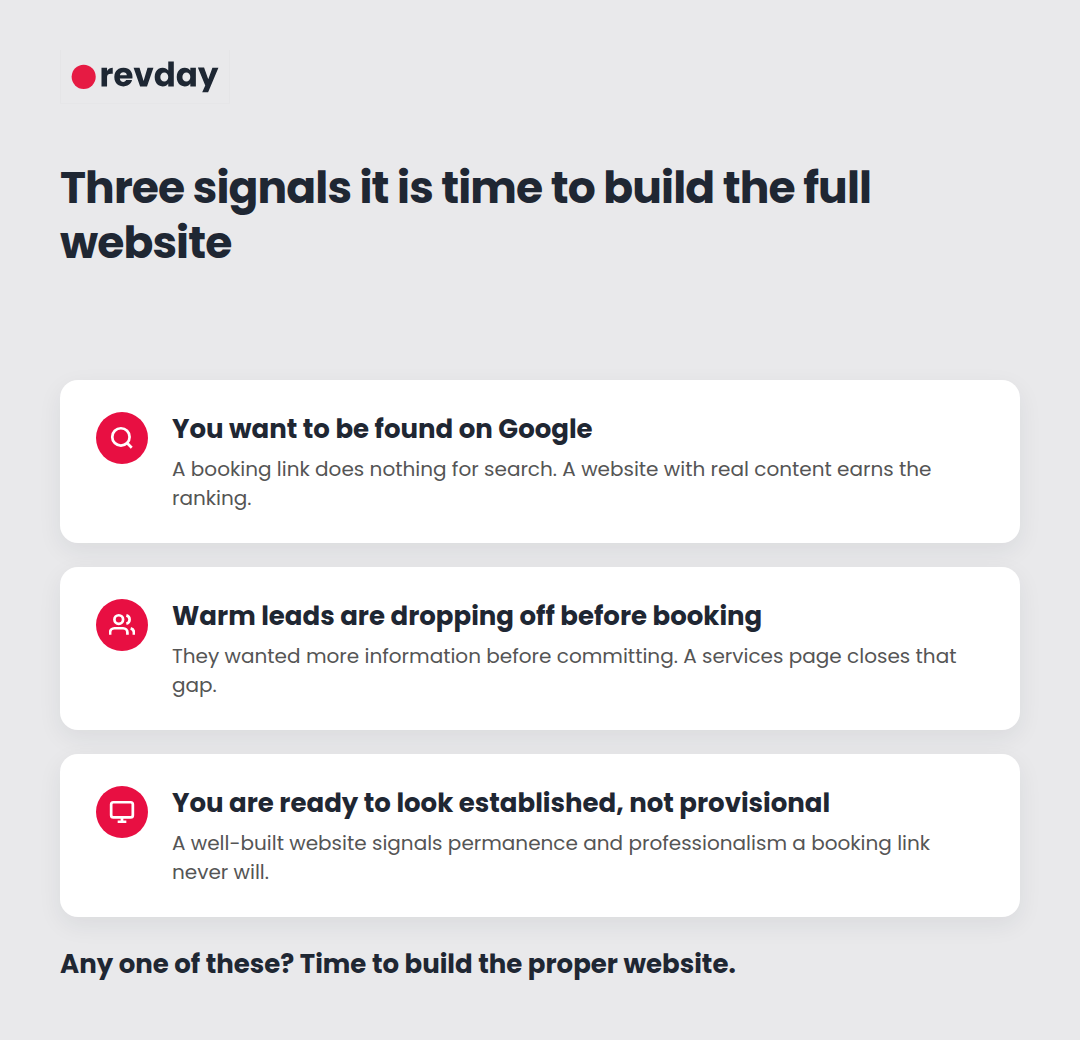
Three signals tell you the booking link has done its job and it's time to go further.
You want to be found on Google. A booking link does nothing for search. If you want people who've never heard of you to discover your service when they type something into Google, you need a website with content that earns that ranking. This is when the investment in pages, copy, and structure pays off in a way a booking link never will.
You're sending warm leads somewhere and losing them. If you've started referring people to your booking link and noticing that some of them drop off before booking, that's a credibility signal. They wanted more information before committing to a conversation and there was nowhere to get it. A simple services page and a clear explanation of your process would close that gap.
You're ready to look like an established business, not a freelancer. At some point, first impressions matter beyond the conversation. A well-built website signals permanence and professionalism in a way a naked booking link doesn't. What your service business website actually needs covers what to include when that time comes, and what to leave out.
The practical sequence
Start with the booking link. Do outreach. Book conversations. Sign a client or two. Get clear on your offer and your audience. Then build the website with something real to say, because at that point you know exactly who you help and why they should hire you, and the website just needs to say that clearly.
The businesses that spend three months building a website before speaking to anyone tend to end up with a beautiful website and no clients. The ones that start with a booking link and outreach tend to have clients by the time the website exists, which is a much better problem to have.

